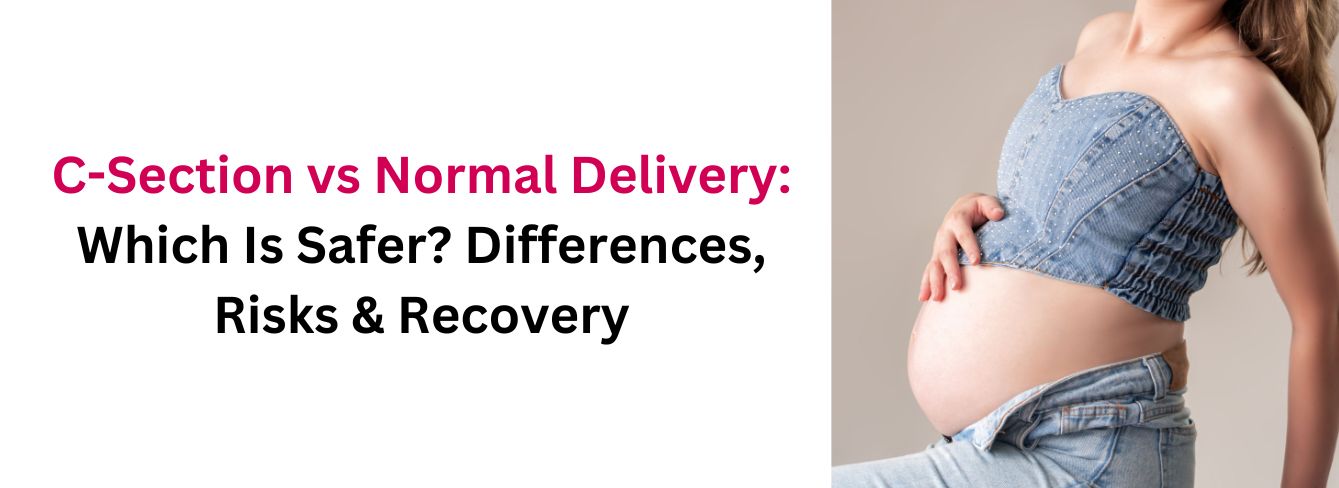

For every expecting mother, the question of C-section vs normal delivery can bring excitement as well as anxiety. In a normal, or vaginal, delivery, the baby is born through the birth canal. In a C-section, the baby is delivered through surgical incisions in the abdomen and uterus. Both can be safe when used appropriately, but they are not interchangeable procedures. The safest choice depends on the mother’s health, the baby's condition, pregnancy complications and the progress of labour.
Normal Delivery vs C-Section: At a Glance
Factor | Normal (Vaginal) Delivery | C-Section (Cesarean Section) |
How baby is delivered | Through the birth canal | Through an incision in the abdomen and uterus |
Procedure | Physiological labour and vaginal birth | Major abdominal surgery |
Anaesthesia | May not require anaesthesia; epidural may be used | Usually spinal or epidural; general anaesthesia in selected situations |
Hospital stay | Usually shorter | Usually longer |
Recovery | Generally faster | Generally slower because the mother is recovering from surgery |
Surgical wound | No abdominal surgical wound | Abdominal and uterine incision |
Risk of surgical infection | No surgical-site risk | Higher because surgery is involved |
Future pregnancies | No C-section scar on the uterus | Uterine scar can influence management of future pregnancies |
When preferred | Usually when pregnancy and labour remain uncomplicated | When vaginal birth would pose significant risk to mother or baby |
The important point is that Caesarean section vs. vaginal delivery is not a competition between two “good” and “bad” options. A vaginal birth is generally preferred when there is no medical reason for surgery, while a C-section can be the safest and potentially life-saving option when complications make vaginal birth unsafe.
What Is Normal or Vaginal Delivery?
Normal delivery, medically called vaginal delivery, occurs when the baby passes through the vagina and birth canal during labour.
How Does Vaginal Delivery Happen?
As labour progresses, contractions help the cervix open. The baby then moves down through the birth canal and is delivered vaginally. Doctors and maternity teams continuously assess the mother and baby throughout labour because a pregnancy that initially appears low-risk can sometimes develop complications.
For an uncomplicated pregnancy, vaginal delivery usually offers several practical advantages:
Faster physical recovery
Earlier mobility after birth
Shorter hospitalisation in many cases
No abdominal surgical wound
Lower exposure to surgical complications
Earlier return to routine activities
Early skin-to-skin contact and breastfeeding when clinically feasible
However, normal delivery does not mean “pain-free delivery". Labour pain varies considerably between women. Medical pain-relief options, including epidural analgesia where available and appropriate, can help make labour more comfortable.
What is a C-Section?
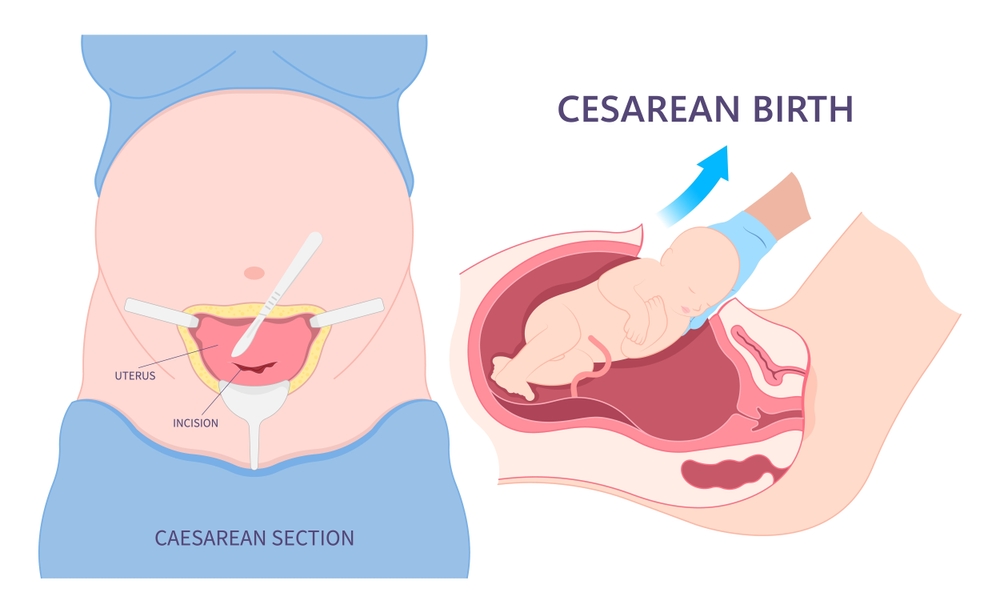
A C-section, or Caesarean section, is a surgical procedure in which an obstetrician delivers the baby through an incision in the mother's abdomen and another incision in the uterus.
How is a C-Section Performed?
Doctors may plan a C-section before labour when a known condition makes vaginal birth unsafe. At other times, an emergency C-section becomes necessary because a complication develops during pregnancy or labour.
A C-section is not simply an “alternative delivery method". It is major abdominal surgery, so the decision should balance the immediate benefits against surgical and future pregnancy risks.
Modern anaesthesia, surgical techniques, antibiotics and monitoring have made C-sections considerably safer. Nevertheless, surgery always carries risks that doctors must consider.
Why is a C-Section Done?
A Cesarean may become necessary when continuing with vaginal delivery could endanger the mother or baby.
Common medical indications include:
1. Fetal Distress
If continuous fetal monitoring shows concerning changes in the baby's heart rate that do not improve with appropriate measures, doctors may recommend urgent delivery.
2. Breech or Transverse Baby
If the baby remains in a breech position, with the buttocks or feet presenting first, or lies transversely near delivery, a C-section may be recommended depending on the circumstances.
3. Placenta Previa
Placenta previa occurs when the placenta lies over or very close to the cervical opening. In significant placenta previa, vaginal delivery can cause severe bleeding, making Cesarean delivery necessary.
4. Placental Abruption
Placental abruption occurs when the placenta separates from the uterus before delivery. Depending on the severity and the condition of the mother and baby, urgent delivery may be required.
5. Labour Does Not Progress
Sometimes the cervix does not dilate adequately or the baby does not descend despite appropriate management of labour. If continuing labour becomes unsafe or unsuccessful, a C-section may be required.
6. Certain Maternal Medical Conditions
Severe preeclampsia, eclampsia, selected serious cardiac conditions and some other maternal illnesses can influence the safest route and timing of delivery.
7. Certain Previous Uterine Surgeries or C-Sections
A previous C-section does not automatically mean that every subsequent pregnancy requires another C-section. Some women may be candidates for VBAC (Vaginal Birth After Cesarean) after an individual assessment.
The type of previous uterine incision, number of previous C-sections, current pregnancy, fetal position and the hospital's ability to provide emergency care all matter.
C-Section vs Normal Delivery: Which is Safer?
This is one of the most common questions pregnant women ask their gynecologist.
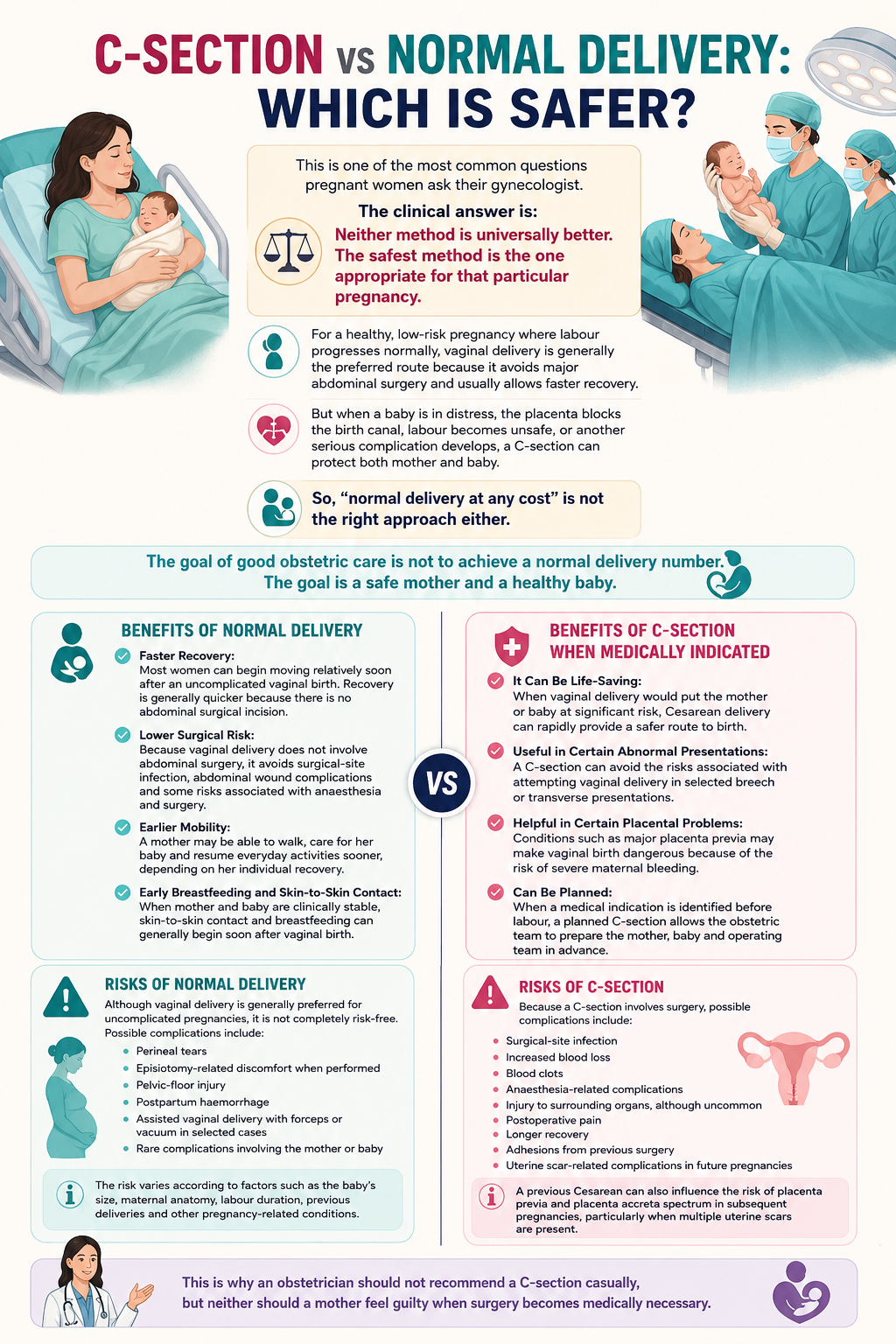
The clinical answer is: Neither method is universally better. The safest method is the one appropriate for that particular pregnancy.
For a healthy, low-risk pregnancy where labour progresses normally, vaginal delivery is generally the preferred route because it avoids major abdominal surgery and usually allows faster recovery.
But when a baby is in distress, the placenta blocks the birth canal, labour becomes unsafe, or another serious complication develops, a C-section can protect both mother and baby.
So, “normal delivery at any cost” is not the right approach either.
The goal of good obstetric care is not to achieve a normal delivery number. The goal is a safe mother and a healthy baby.
Benefits of Normal Delivery
Faster Recovery: Most women can begin moving relatively soon after an uncomplicated vaginal birth. Recovery is generally quicker because there is no abdominal surgical incision.
Lower Surgical Risk: Because vaginal delivery does not involve abdominal surgery, it avoids surgical-site infection, abdominal wound complications and some risks associated with anaesthesia and surgery.
Earlier Mobility: A mother may be able to walk, care for her baby and resume everyday activities sooner, depending on her individual recovery.
Early Breastfeeding and Skin-to-Skin Contact: When mother and baby are clinically stable, skin-to-skin contact and breastfeeding can generally begin soon after vaginal birth.
Risks of Normal Delivery
Although vaginal delivery is generally preferred for uncomplicated pregnancies, it is not completely risk-free.
Possible complications include:
Perineal tears
Episiotomy-related discomfort when performed
Pelvic-floor injury
Postpartum haemorrhage
Assisted vaginal delivery with forceps or vacuum in selected cases
Rare complications involving the mother or baby
The risk varies according to factors such as the baby's size, maternal anatomy, labour duration, previous deliveries and other pregnancy-related conditions.
Benefits of C-Section When Medically Indicated
A C-section also has an important place in modern obstetrics.
It Can Be Life-Saving: When vaginal delivery would put the mother or baby at significant risk, Cesarean delivery can rapidly provide a safer route to birth.
Useful in Certain Abnormal Presentations: A C-section can avoid the risks associated with attempting vaginal delivery in selected breech or transverse presentations.
Helpful in Certain Placental Problems: Conditions such as major placenta previa may make vaginal birth dangerous because of the risk of severe maternal bleeding.
Can Be Planned: When a medical indication is identified before labour, a planned C-section allows the obstetric team to prepare the mother, baby and operating team in advance.
Risks of C-Section
Because a C-section involves surgery, possible complications include:
Surgical-site infection
Increased blood loss
Blood clots
Anaesthesia-related complications
Injury to surrounding organs, although uncommon
Postoperative pain
Longer recovery
Adhesions from previous surgery
Uterine scar-related complications in future pregnancies
A previous Cesarean can also influence the risk of placenta previa and placenta accreta spectrum in subsequent pregnancies, particularly when multiple uterine scars are present.
This is why an obstetrician should not recommend a C-section casually, but neither should a mother feel guilty when surgery becomes medically necessary.
C-Section vs Normal Delivery: Recovery Difference
Recovery is one of the clearest practical differences between the two.
Recovery After Normal Delivery
After an uncomplicated vaginal birth, many women can start walking within hours. They may experience vaginal soreness, perineal discomfort or pelvic-floor symptoms, but overall physical recovery is usually quicker.
Recovery After C-Section
A C-section requires recovery from abdominal surgery. The incision needs time to heal, and activities such as heavy lifting may need to be restricted for a period advised by the obstetrician.
Pain, fatigue and difficulty changing positions can be more noticeable during the early postoperative period.
The exact recovery timeline varies from woman to woman. A mother with complications after vaginal birth may need longer recovery than expected, while another woman may recover smoothly after a C-section.
Can You Have a Normal Delivery After a C-Section?
Some women may be suitable candidates for VBAC (Vaginal Birth After Cesarean) . Eligibility depends on factors including the previous uterine incision, number of previous C-sections, current pregnancy and the hospital's ability to provide emergency care.
Can You Increase Your Chances of Normal Delivery?
No doctor can guarantee a vaginal delivery because labour can change unexpectedly.
However, women can support a healthy pregnancy by:
Attending regular antenatal check-ups
Managing diabetes, blood pressure and other medical conditions
Maintaining a balanced pregnancy diet
Staying physically active when the obstetrician permits it
Following recommended weight-gain guidance
Discussing baby's position and pregnancy risks during prenatal visits
Understanding the birth plan before labour begins
Choosing a maternity facility equipped to manage both vaginal birth and emergency C-section when required
The objective should never be to avoid a C-section at all costs. The objective is to reduce avoidable intervention while ensuring timely intervention when it becomes medically necessary.
What Do Indian Statistics Say About C-Section Delivery?
C-section rates have increased considerably in India, making informed counselling increasingly important.
According to NFHS-5 (2019–21), 21.5% of births in India were delivered by C-section. The difference between sectors was substantial: C-section accounted for 47.4% of births in private health facilities compared with 14.3% in public health facilities.
These numbers do not mean that every C-section is unnecessary. Private hospitals may also manage a larger proportion of high-risk pregnancies, referrals and complicated cases. The statistics do, however, reinforce why every C-section should have a clear clinical rationale.
How Does an Obstetrician Decide the Mode of Delivery?
An experienced obstetrician looks at the complete clinical picture rather than choosing C-section or vaginal delivery based on one factor.
The assessment may include:
Mother's overall health
Blood pressure and pregnancy-related complications
Baby's growth and wellbeing
Fetal presentation and position
Placental location
Gestational age
Previous deliveries and C-sections
Cervical changes and labour progress
Fetal heart-rate monitoring
Maternal and fetal condition during labour
This personalised approach becomes especially important in Punjab, where NFHS-5 (2019-21) data show substantial C-section use across both private and public facilities.
At Vardaan IVF Centre, our obstetric and gynecology care follows the principle that every pregnancy deserves individual assessment. With over 24 years of obstetric and gynecological experience behind the centre's vision, Mr. Vareesh Kumar and the clinical team support families through personalised pregnancy and fertility care. Vardaan IVF Centre has modern centres in Jalandhar and Amritsar, Punjab and has helped 30,000+ couples on their journey toward parenthood.
What Mothers Share About C-Section and Normal Delivery?
Patients on online forums often describe very different experiences. Some mothers report that they felt mobile within a short period after vaginal birth, while others describe significant perineal pain. Mothers who underwent C-sections commonly mention incision discomfort and difficulty moving during the initial days, while some also say their recovery was smoother than they expected.
These experiences can be useful for understanding what childbirth may feel like, but they should not replace medical advice. Every pregnancy, labour and recovery is different.
When Should You Consult a Gynecologist?
Pregnancy care should begin well before labour.
Consult your obstetrician regularly, particularly if you have:
Previous C-section or uterine surgery
High blood pressure or diabetes
Previous pregnancy complications
Multiple pregnancy
Placental abnormalities
Abnormal fetal position
Reduced fetal movements
Bleeding during pregnancy
Concerns about baby's growth
Questions about VBAC or planned C-section
If you are looking for the best gynecologist in Amritsar Punjab, focus not only on experience but also on whether the doctor provides evidence-based counselling, monitors pregnancy carefully and has access to appropriate emergency obstetric and newborn care when required.
Final Takeaway: C-Section vs Normal Delivery
The right question is not simply, “C-section or normal delivery—which is better?”
The better question is:
“Which mode of delivery is safest for me and my baby based on my current pregnancy?”
For an uncomplicated pregnancy, vaginal delivery is generally preferred because it avoids major abdominal surgery and usually allows a faster recovery. But when a medical complication makes vaginal birth unsafe, a C-section can be the safest—and sometimes life-saving—choice.
A C-section is not a failure of normal delivery. And choosing vaginal delivery should never mean refusing a medically necessary C-section.
Good obstetric care means knowing when to wait, when to support labour and when to intervene.
For personalised pregnancy, childbirth and delivery planning in Punjab, consult an experienced obstetrician who can assess your individual risk factors and discuss both normal delivery and Cesarean options with you.
Frequently Asked Questions
1. Is normal delivery safer than C-section?
For a healthy, uncomplicated pregnancy, vaginal delivery generally avoids the surgical risks associated with C-section. However, if a medical complication makes vaginal birth unsafe, C-section may be the safer option.
2. Is C-section more painful than normal delivery?
Pain occurs differently. Labour can be painful during vaginal delivery, while C-section usually involves less pain during the operation because of anaesthesia but more postoperative pain during recovery.
3. How many days does it take to recover from normal delivery?
Many women recover significantly within days and return to routine activities sooner than after C-section, although complete recovery varies according to tears, complications and individual health.
4. How long does C-section recovery take?
Initial recovery occurs over the first few weeks, while complete recovery from abdominal surgery can take around 6–8 weeks or longer in some women. Your obstetrician will advise you about lifting, exercise, wound care and follow-up.
5. Does C-section affect future pregnancies?
A C-section creates a uterine scar, which can influence delivery planning and increase certain risks in future pregnancies, including placenta previa and placenta accreta spectrum. However, many women have healthy pregnancies after a C-section.
6. Can I choose a C-section without a medical reason?
Delivery decisions should involve informed discussion with your obstetrician. A C-section is major surgery and carries risks, so the potential benefits and risks should be assessed for the individual pregnancy rather than treating it as a routine substitute for vaginal birth.
7. What is the most important thing during childbirth?
The priority is the safety and wellbeing of both mother and baby. A vaginal delivery is desirable when safe, but a medically necessary C-section should never be delayed simply to achieve a “normal delivery.”