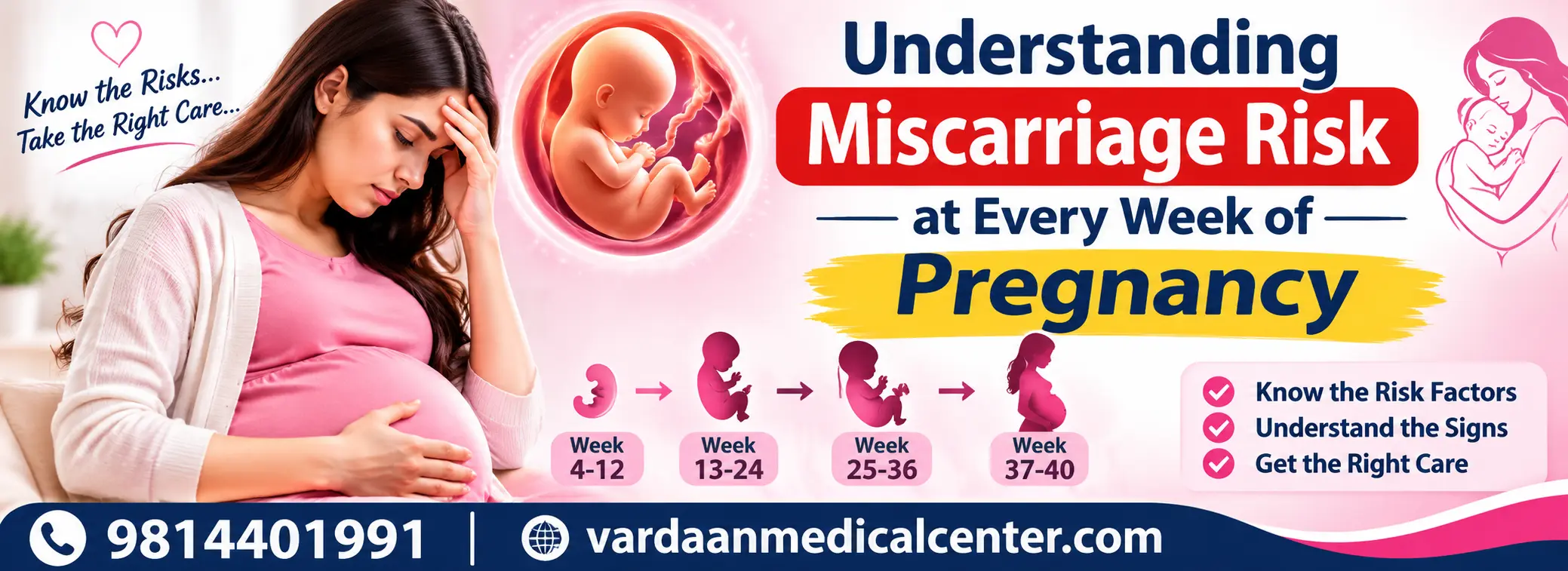

Seeing a positive pregnancy test can fill you with joy, but it's also natural to worry about miscarriage, especially in the early weeks before your first scan. You may find yourself watching every little symptom or checking your ultrasound reports again and again, and if you feel this way, you're not alone. The good news is that while most miscarriages happen in the first trimester, the risk drops steadily as your pregnancy moves forward. Knowing what the numbers really mean, what can affect your risk, and when to reach out to your doctor can help you go through early pregnancy feeling calmer and more in control.
What Is the Risk of Miscarriage During Pregnancy?
A miscarriage is when a pregnancy ends on its own before 20 weeks. It's more common than many people realize, with around 10 to 20 out of every 100 known pregnancies ending this way. Some losses happen so early that a woman may not even know she was pregnant yet.
According to India's National Family Health Survey (NFHS-5), about 82% of reported pregnancy losses happen in the first 12 weeks, also known as the first trimester. After this early stage, the risk drops a lot. It's important to understand that this number shows when most losses happen, not that 82% of pregnancies end in miscarriage. If you've faced a loss before or feel anxious about your pregnancy, speaking with a fertility specialist at a trusted IVF center in Jalandhar can give you the right guidance and peace of mind.
Miscarriage Rates by Week: Risk Trends & Key Insights
Gestational Stage | Risk Level & Trend | Clinical Overview |
Weeks 4–5 | Highest initial risk phase | Loss may occur before ultrasound confirmation. |
Weeks 6–7 | Risk begins to drop | Scans clarify fetal viability and progress. |
Weeks 8–9 | Progressive decline in risk | Normal scan results offer key reassurance. |
Weeks 10–12 | Substantially reduced risk | Most pregnancies reaching this point continue normally. |
Post-Week 12 | Significantly lower likelihood | Loss becomes rare after the first trimester. |
How Does Miscarriage Risk Change as Pregnancy Progresses?
In the early weeks, your body is working hard as your baby and the placenta begin to form. Sometimes, if the pregnancy isn't able to develop the way it should, a miscarriage can happen. The reassuring part is that with every passing week, this risk usually goes down.
Your chances can also look different depending on when your pregnancy was confirmed and whether a scan has already shown your baby's heartbeat, which is a very positive sign. If you have questions about your own risk, the team at a trusted IVF clinic in Jalandhar can explain what your scan results mean and guide you through each stage with care.
Chances of Miscarriage After Seeing a Heartbeat
Seeing your baby's heartbeat on an ultrasound is one of the most reassuring moments in early pregnancy. Once a heartbeat is confirmed, the risk of miscarriage drops a lot, often to less than 3 to 5% in low-risk pregnancies. While this is a very positive sign, it doesn't remove the risk completely.
Your age also plays a role, as the risk slowly rises after 35 and more so after 40. If you're over 35 or have concerns about your pregnancy, a trusted fertility centre in Jalandhar can offer the extra care and close monitoring you need.
What Causes Most Early Miscarriages?
One of the most common reasons for an early miscarriage is a problem with the baby's chromosomes, which accounts for around 50 to 60% of losses in the first trimester. These changes usually happen purely by chance, so many miscarriages simply can't be prevented.
Everyday things like walking, going to work, climbing stairs, or light exercise don't cause a miscarriage in a healthy pregnancy. If you've been through a loss, please remember it is not your fault. If you've had more than one miscarriage, a specialist at a trusted IVF center in Jalandhar can run tests to look for any underlying cause and help you plan your next pregnancy with confidence.
Factors That Can Affect Miscarriage Risk
Several things can affect your chances of miscarriage, including:
Your Age: As a woman gets older, the chances of chromosome problems in the egg go up, which can slightly raise the risk of miscarriage.
Past Miscarriage: Having one loss doesn't mean it will happen again.
Health Conditions: Problems like uncontrolled diabetes, certain thyroid issues, or a blood-clotting condition called antiphospholipid syndrome can affect your pregnancy.
Lifestyle Habits: Smoking, alcohol, and some drugs or medicines can increase risks. If you take any prescribed medicine, talk to your doctor first instead of stopping it on your own.
If any of these apply to you, a visit to a trusted IVF centre in Jalandhar can help you understand your risk and get the right support early on.
Can Symptoms Predict Miscarriage?
Symptoms alone can't confirm a miscarriage. Light spotting or mild cramps can happen in healthy pregnancies, while some miscarriages show no signs at all. Regular scans at a trusted IVF hospital in Jalandhar can help monitor your pregnancy closely.
See your doctor if you have bleeding, ongoing cramps, or lower belly pain. Get emergency care right away for heavy bleeding, severe or one-sided pain, dizziness, fainting, or shoulder-tip pain, as these may signal an ectopic pregnancy.
How Is Miscarriage Diagnosed, and Can Risk Be Reduced?
Your doctor may do an ultrasound and check your pregnancy hormone (beta-hCG) levels, sometimes repeating them after a few days for a clear answer. Bleeding or a home test alone can't confirm a miscarriage.
Taking folic acid, avoiding smoking and alcohol, managing health conditions, and attending regular check-ups at a trusted IVF clinic in Jalandhar can support a healthy pregnancy, though many early losses can't be prevented.
Frequently Asked Questions
1. What week of pregnancy can I stop worrying about miscarriage?
The risk drops a lot after 12 weeks, though regular check-ups are still important.
2. What are the riskiest weeks for a miscarriage?
The first 12 weeks, especially before 8 weeks, carry the highest risk.
3. What chromosomal issues cause miscarriage?
Extra or missing chromosomes, like trisomy, that happen by chance as the egg or sperm forms.
4. How can you tell if a miscarriage is starting?
Bleeding, cramps, lower belly pain, or passing tissue are common signs, so see your doctor right away.