

Premature Ovarian Insufficiency (POI) Care at Vardaan
Complete POI solutions with experienced fertility experts, advanced reproductive care, and personalized treatment strategies.
Struggling to Conceive? Talk to Our Fertility Expert
IVF Success Stories
30K+ Babies Delivered & Counting…







What is Premature Ovarian Insufficiency?
Premature ovarian insufficiency (POI) is a condition that occurs when your ovaries fail earlier than average, often evaluated by a fertility specialist in Amritsar at a fertility centre in Punjab. Your ovaries are small glands located on both sides of your uterus that produce and release eggs during ovulation. Your ovaries also make important hormones for menstruation, pregnancy, and other bodily functions. The usual age for egg production to stop, known as menopause, is around 51. For some women, POI happens abruptly, and they suddenly stop having a regular menstrual period. But, for others, a diagnosis of POI comes after months or years of irregular periods.
Premature ovarian insufficiency was previously known as primary ovarian failure. However, healthcare providers prefer “insufficiency” rather than “failure” because research has shown that women with POI can have intermittent ovulation. This means you may still release an egg and get pregnant if you have POI. In fact, around 5% to 10% of those with a diagnosis of POI will spontaneously get pregnant without treatment for infertility. For this reason, POI is often also called “decreased ovarian reserve.
What causes Premature Ovarian Insufficiency (POI)?
While the exact cause remains unknown in about 90% of cases, primary ovarian insufficiency (POI)—a condition frequently evaluated during an infertility treatment in Amritsar consultation—is fundamentally linked to underlying problems with the ovarian follicles where eggs mature.
In some instances, women simply run out of working follicles prematurely or experience functional issues due to specific clinical factors, which can also influence decisions regarding IVF cost in Amritsar and advanced reproductive options. These recognized causes include:
| Causes of POI | Details |
|---|---|
| Genetic Conditions: | Inherited disorders such as Turner syndrome and Fragile X syndrome. |
| Reduced Follicle Supply: | A naturally low initial number of follicles. |
| Autoimmune Disorders: | Conditions like Addison's disease and thyroiditis where the immune system attacks ovarian tissue. |
| Medical Treatments: | Exposure to pelvic radiation therapy or chemotherapy. |
| Metabolic & Environmental Factors: | Metabolic disorders or exposure to toxins such as cigarette smoke, chemicals, and pesticides. |
Who is at risk for primary ovarian insufficiency (POI)?
- Family History: If you have a mother or sister with POI, you are more likely to have it, prompting many patients to seek guidance from a fertility specialist in Amritsar.
- Genes: Some changes to genes and genetic conditions put you at higher risk for POI. For example, women with Fragile X syndrome or Turner syndrome are at higher risk.
- Certain Diseases: Such as autoimmune diseases and some viral infections.
- Cancer Treatments: Such as chemotherapy and radiation therapy.
- Age: You can get POI when you're young, but it becomes more common between the ages of 35 and 40, leading many individuals to explore comprehensive infertility treatment in Amritsar.
What other problems can primary ovarian insufficiency (POI) cause?
Because primary ovarian insufficiency (POI) results in reduced levels of essential reproductive hormones, patients often require coordinated medical management that can be evaluated at an IVF center in Jalandhar. The resulting hormonal imbalances place individuals at an increased risk for several associated health conditions:
- Heart Disease: Lower estrogen levels can impair arterial function and accelerate cholesterol buildup, increasing the risk of atherosclerosis.
- Infertility: Compromised ovarian reserve directly impacts natural conception, frequently requiring consultation with an IVF doctor in Jalandhar.
- Osteoporosis: Estrogen plays a vital role in maintaining bone density; without adequate levels, women with POI face a higher risk of developing fragile, brittle bones.
What are the treatments for primary ovarian insufficiency (POI)?
To accurately diagnose primary ovarian insufficiency (POI) and determine the most appropriate personalized care pathway, leading centers and any specialized fertility clinic in Punjab utilize a comprehensive diagnostic evaluation, often the first step when seeking an infertility treatment in Amritsar:
- Detailed Medical History & Physical Exam: Your provider reviews your personal and family medical history—including any relatives with POI—and performs a physical examination to rule out other underlying disorders.
- Hormone & Genetic Blood Tests: Blood panels measure key hormone levels (such as FSH and estrogen) and may include a chromosome analysis (karyotyping) to check for genetic conditions.
- Pelvic Ultrasound & Pregnancy Screening: A pregnancy test is performed to rule out gestation, followed by a pelvic ultrasound to examine the size of your ovaries and assess the number of remaining follicles.
Not sure whether IVF is the right next step?
Our fertility specialists can guide you through the most suitable treatment options for your situation.
Struggling to Conceive? Talk to Our Fertility Expert
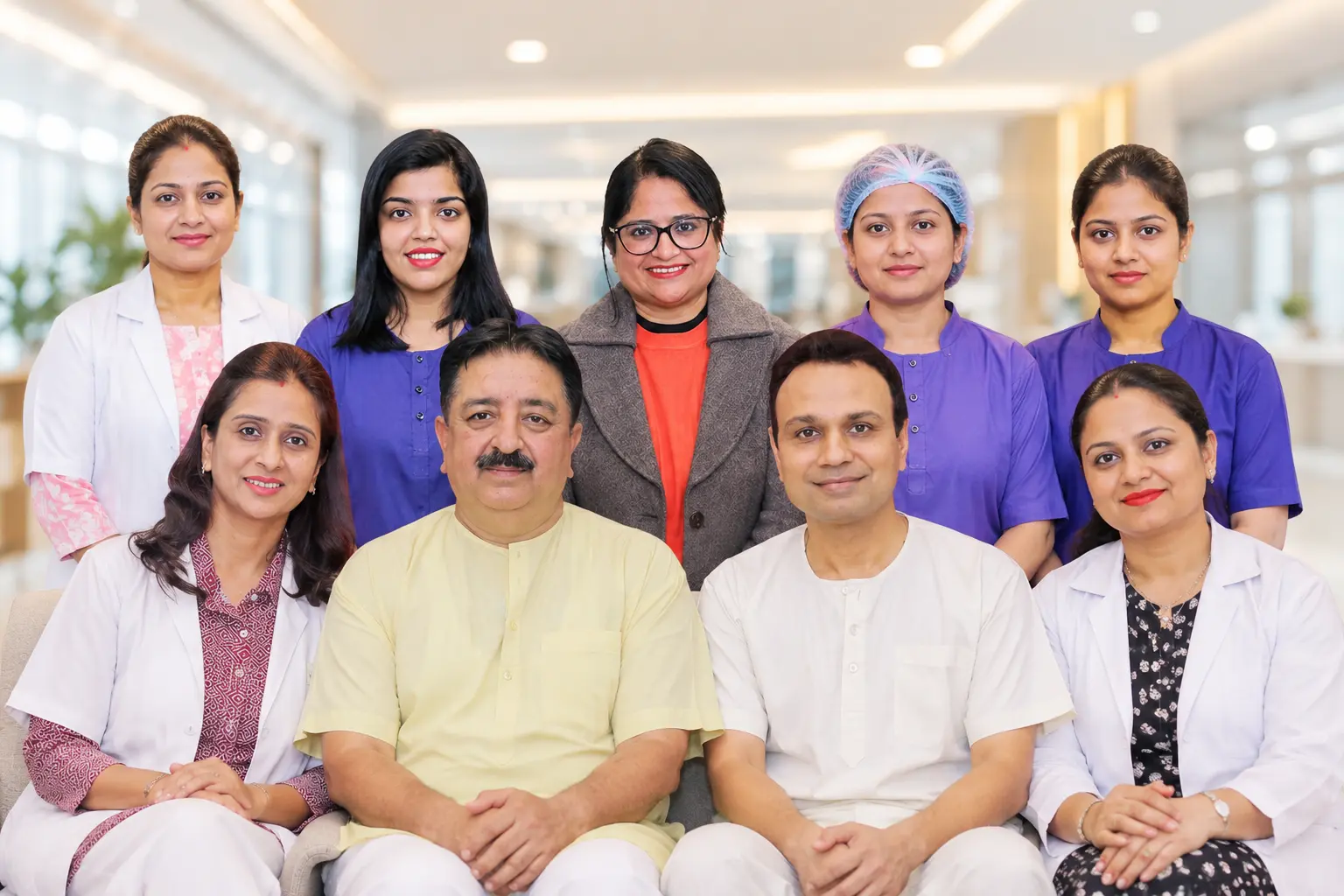
Why Vardaan?
Patients choose Vardaan Medical Center for Premature Ovarian Insufficiency (POI) because our expert fertility doctor in Punjab combines advanced diagnostic technology with compassionate, personalized reproductive care to help navigate low ovarian reserve and tailor effective family-building strategies.
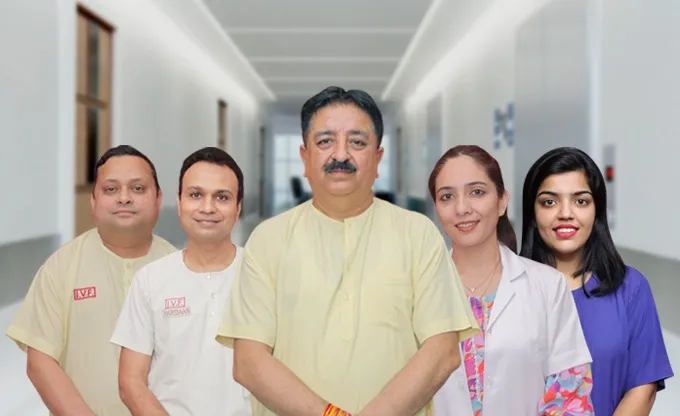
Our IVF & Fertility Care Team
Meet our experienced fertility specialists, embryologists, medical officers and dedicated support team.



.png)

Frequently Asked Questions
It causes lower estrogen and hormone levels, leading to irregular periods, symptoms similar to menopause, and a higher risk of conditions like osteoporosis and heart disease.
No, permanent restoration of normal ovarian function is generally not possible, though ovarian activity can sometimes fluctuate unpredictably.
While natural conception is difficult, around 5% to 10% of women conceive spontaneously, and long-term health can be successfully managed with hormone therapy and lifestyle care.
It is commonly associated with infertility, osteoporosis, heart disease, anxiety or depression, and low thyroid function (hypothyroidism).