
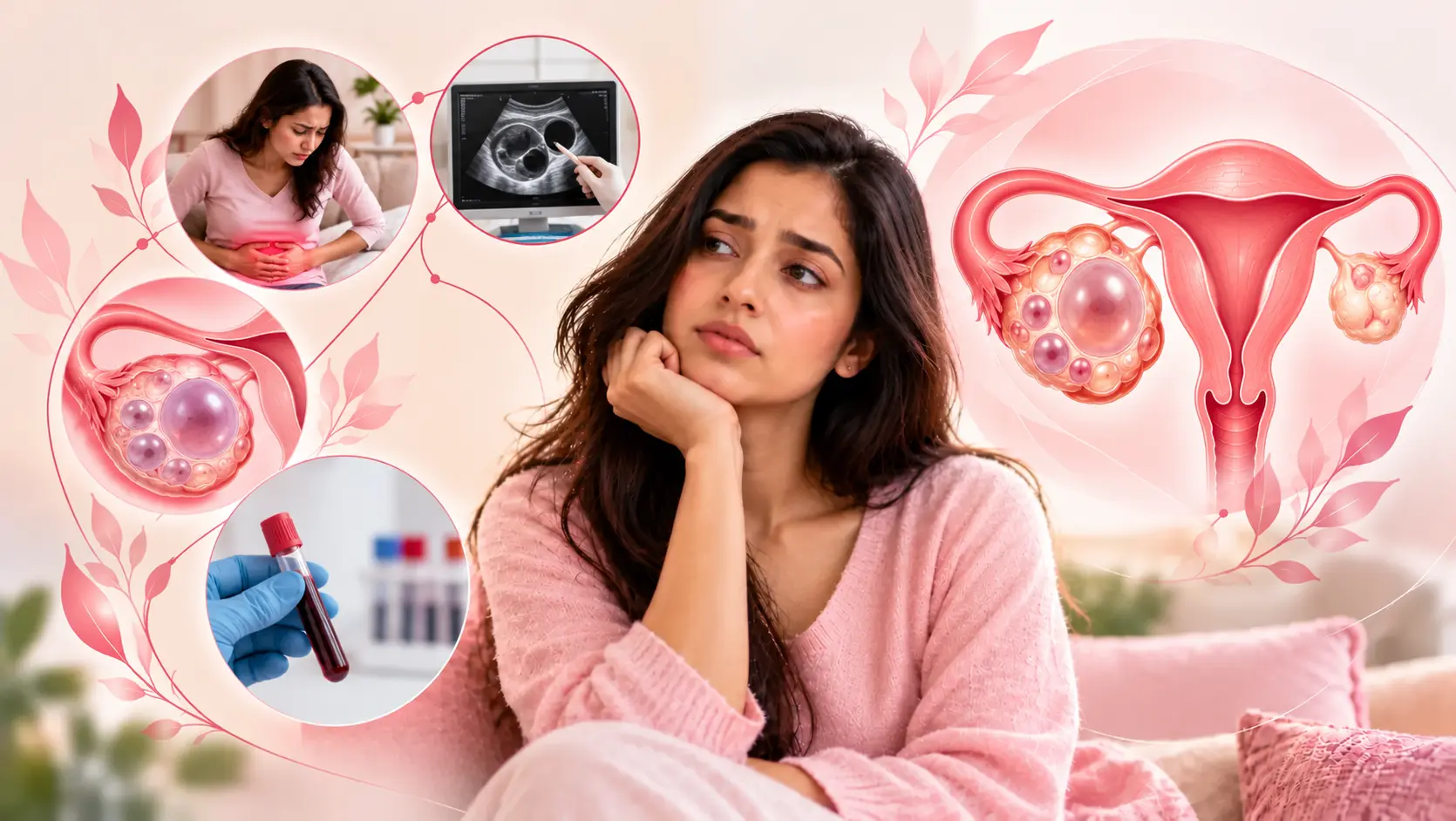
Ovarian Cysts Care at Vardaan
Complete ovarian cyst solutions with experienced fertility experts, advanced diagnostic imaging, and personalized treatment strategies.

Struggling to Conceive? Talk to Our Fertility Expert
IVF Success Stories
30K+ Babies Delivered & Counting…












What Is an Ovarian Cyst?
An ovarian cyst is a small fluid-filled or semi-solid sac that forms on or inside one of the ovaries. They are extremely common—particularly in women of reproductive age before menopause—and in most cases are non-cancerous and cause no pain or discomfort. Many women never even know they have one, as ovarian cysts are often discovered incidentally during a routine pelvic exam or ultrasound. While the majority resolve on their own without treatment, some cysts can grow larger or cause complications, making regular gynaecological check-ups essential. If you haven't had a recent screening, visit our top gynaecologist in Amritsar or our fertility centre in Jalandhar at Vardaan Medical Center—early detection is always the safest approach.
Symptoms and Causes
Symptoms of Ovarian Cysts
Pelvic Pain
Pelvic pain or a dull ache in the lower back.
Abdominal Fullness
A feeling of fullness or bloating in the lower abdomen.
Pain During Sex
Pain during sexual intercourse.
Painful or Irregular Periods
Painful or irregular menstrual periods.
Urinary Problems
Frequent urination or difficulty passing stools.
Causes of Ovarian Cysts
Abnormal Cell Reproduction
Unusual cell growth can lead to dermoid cysts or cystadenomas.
Endometriosis
Endometriomas (chocolate cysts) frequently form on the ovaries in women with severe endometriosis.
PCOS
Multiple small cysts can develop on the ovaries due to hormonal imbalance.
Pelvic Inflammatory Disease
Severe pelvic infections can spread to the ovaries and trigger cyst formation.
If you are experiencing any of these symptoms, consult our infertility specialist in Jalandhar, visit our fertility clinic in Amritsar, or reach out to our team at the women's care centre in Amritsar at Vardaan Medical Center for a thorough evaluation and personalized care.
Risk Factors for Ovarian Cysts
| Risk Factors for Ovarian Cysts | Details |
|---|---|
| Age | Ovarian cysts are significantly more common in women who have not yet reached menopause. |
| Pregnancy | Cysts are more likely to form and persist during pregnancy as part of hormonal changes. |
| History of Ovarian Cysts | Having had a cyst before considerably raises your chances of developing another one; early follow-up with a gynecologist in Jalandhar is advised. |
| Existing Medical Conditions | Women with endometriosis, PCOS, or other hormonal disorders are at a higher risk of developing ovarian cysts. |
| Fertility Medications | Ovulation-stimulating medications such as clomiphene (Clomid) can increase cyst formation — women undergoing infertility treatment in Amritsar at Vardaan Medical Center are monitored closely to manage this risk. |
Diagnosing Ovarian Cysts
- Pregnancy Test — Conducted first to determine whether pregnancy is contributing to your symptoms.
- Pelvic Exam — Your doctor physically examines the pelvic area to detect any unusual lumps, swelling, or changes in the ovaries — performed by our best gynecologist in Jalandhar as part of a thorough initial assessment.
- Ultrasound — The most effective imaging tool for detecting ovarian cysts; identifies the cyst's location, size, and whether it is fluid-filled or solid.
- Laparoscopy is a minimally invasive procedure where a tiny camera is inserted through a small abdominal incision to directly visualize the ovaries; the cyst can often be removed during the same procedure—commonly recommended at our IVF treatment center in Jalandhar when cysts are affecting fertility.
Treatment for Ovarian Cysts
Treatment depends on the cyst's type, size, cause, and your age and symptoms. At Vardaan Medical Center, we start with the least invasive approach:
Treatment options may include:
- Watchful Waiting — Many functional cysts resolve on their own; a follow-up ultrasound after a few weeks confirms if the cyst has changed or disappeared
- Medications — Hormonal birth control pills stop ovulation, preventing cysts from growing or recurring
- Ovarian Cystectomy — Minimally invasive removal of the cyst through small abdominal incisions, preserving the ovary; our fertility doctor in Amritsar prioritizes fertility preservation in every surgical decision
- Laparotomy — A larger surgical procedure for very large or complex cysts; our expert team at the IVF centre in Punjab at Vardaan ensures comprehensive care throughout.
Concerned about an ovarian cyst?
Our fertility specialists can guide you through the most suitable treatment options for your situation.
Struggling to Conceive? Talk to Our Fertility Expert

Why Choose Vardaan?
At Vardaan Hospital, we provide comprehensive, specialized care for all types of ovarian cysts, including functional cysts, endometriomas, and dermoid cysts. Our expert gynecological and fertility specialists use high-precision diagnostic ultrasound and minimally invasive, laparoscopic techniques to remove or manage cysts while carefully preserving your ovarian tissue, hormone balance, and future fertility.
Our IVF & Fertility Care Team
Meet our experienced fertility specialists, embryologists, medical officers and dedicated support team.






.png)


Frequently Asked Questions
An ovarian cyst generally needs removal if it is larger than 5 to 10 centimeters, persists across multiple menstrual cycles, causes severe pelvic pain, or shows suspicious or solid features on an ultrasound.
If left untreated, certain large cysts can rupture or cause ovarian torsion (twisting of the ovary), leading to severe abdominal pain, internal bleeding, and potential damage to ovarian tissue.
You may experience mild pelvic aching, bloating, or changes in your period, though many cysts cause no symptoms at all and resolve naturally without medical intervention.
While not all cysts can be prevented, hormonal contraceptives (such as birth control pills) can stop ovulation and help prevent new cysts from forming.