If you've ever spent the two-week wait reading into every little cramp, twinge, or spot of blood, you're definitely not the only one. When you're trying to conceive, whether naturally or through IVF, implantation can feel like the most nerve-wracking part of the whole journey. It's happening quietly inside your body, and you have no way of seeing it. So the questions start piling up:
"Has the embryo implanted yet?"
"Is this light spotting implantation bleeding vs period starting?"
"What are the real signs of successful implantation?"
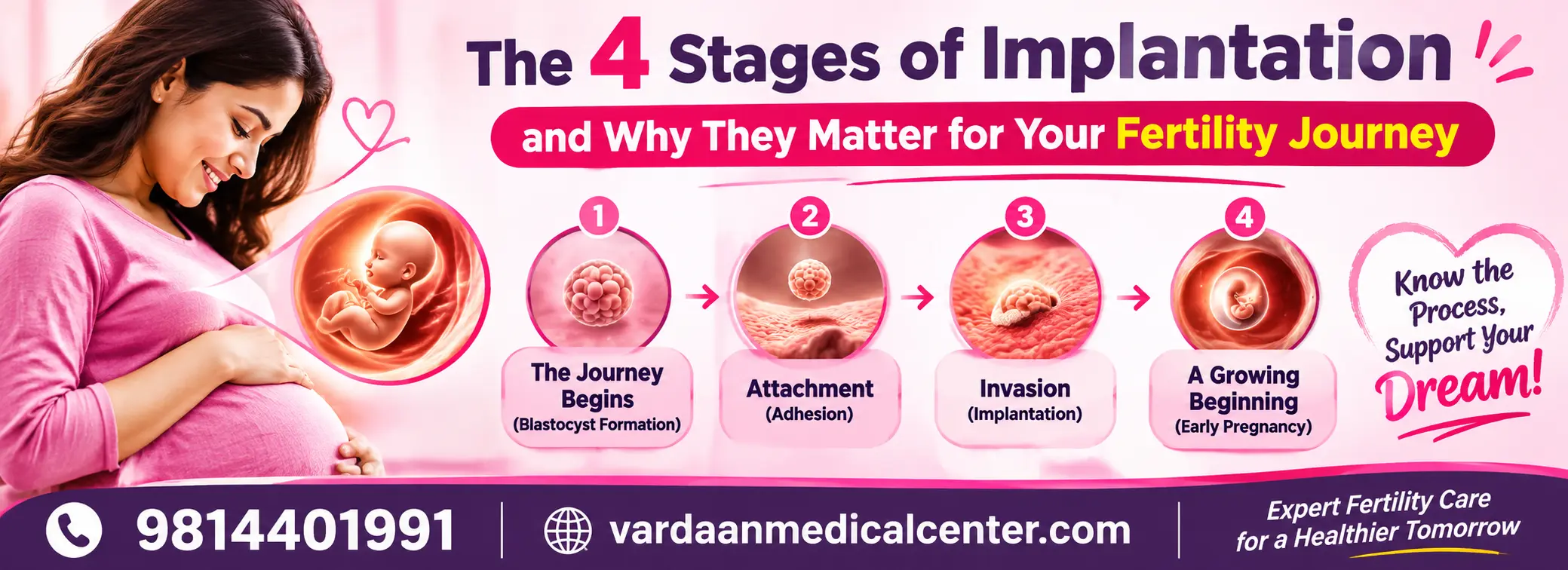
Here's something many women don't know: implantation doesn't happen all at once. It's a slow, carefully timed process that unfolds in 4 stages. Each stage plays its own part in helping a fertilized egg settle in, attach, and begin growing into a healthy pregnancy. Once you understand what's happening at each step and what your body might be telling you along the way, the waiting can feel a little less mysterious and hopefully a little less stressful too.
Understanding the stages of implantation can help you:
Recognize early signs with more clarity
Know what your body is doing in early pregnancy
Feel more confident during IVF, whether at an IVF clinic in Amritsar or elsewhere
Worry less during the two-week wait
So let's clear up the mystery and walk through the 4 stages of implantation, step by step.
What Is Implantation?
Implantation is the moment a fertilized egg, now called a blastocyst, attaches itself to the lining of your uterus and settles in. This is the step that truly marks the start of a pregnancy, because it's how the embryo begins receiving oxygen and nutrients from your body.
Fertilization usually happens in the fallopian tube. From there, the tiny embryo makes its way down to the uterus, a journey that takes a few days. So, when does implantation happen after ovulation? For most women, it takes place about 6 to 12 days later, most often around days 8 to 10.
Once the embryo has implanted, your body starts producing pregnancy hormones like hCG, which help the baby grow and keep the pregnancy going.
What Week of Pregnancy Is Implantation?
Implantation usually happens 6 to 12 days after ovulation. Since pregnancy is counted from the first day of your last period, this falls around week 3 of pregnancy.
Timing can vary slightly for each woman. If you're having treatment at an IUI clinic in Amritsar, your doctor can track your ovulation and help pinpoint when implantation is likely.
Implantation Timeline at a Glance
Day 0: Ovulation and fertilization
Days 1–5: The embryo moves through the fallopian tube
Days 5–6: The embryo reaches the uterus
Days 6–10: Implantation begins
Days 10–14: hCG levels rise
The 4 Stages of Implantation
Implantation happens slowly, in four steps.
Stage One: Hatching
The embryo breaks out of its outer shell so it can touch the lining of the uterus.
Stage Two: Apposition
The embryo gently rests against the uterus lining, looking for the best place to settle.
Stage Three: Adhesion
The embryo starts to stick more firmly to the lining.
Stage Four: Invasion (Embryo Embedding)
In this final stage of implantation, the embryo goes deep into the lining. Blood vessels and the early placenta start to grow. Your body also begins making the pregnancy hormone hCG. So, when to take a pregnancy test after implantation? It's best to wait until your period is late to get a clear result.
Implantation Process Day by Day
Day 1–4 After Fertilization
The fertilized egg divides into more cells as it moves down the fallopian tube.
Day 5–6
The embryo (now a blastocyst) reaches the uterus and breaks out of its shell.
Day 6–7
It touches the uterus lining and starts to attach.
Day 7–10
The embryo goes deeper into the lining. Some women feel mild cramps now. In implantation cramps vs period cramps, implantation cramps are usually lighter and shorter.
Day 10–14
Your body makes more hCG, the pregnancy hormone, which a test can pick up a few days later.
What Are the Positive Signs of Implantation?
Implantation bleeding: Light pink or brown spotting for 1–2 days
Cramping: Mild cramps in the lower belly
Tender breasts: Sore breasts due to hormone changes
Tiredness: Feeling more tired than usual
Higher body temperature: It may stay raised instead of dropping
Bloating: Bloating in early pregnancy
These signs can feel like PMS, so a pregnancy test is the only way to know for sure. An IVF hospital in Amritsar can guide you on when to test.
Can You Feel Implantation Happening?
Most women don't feel anything at all. A few notice mild cramps or light spotting, but there's no clear feeling that tells you it's happening.
What Helps Implantation Succeed?
Healthy uterus lining: A thick, healthy lining gives the embryo a good place to attach.
Balanced hormones: Enough progesterone and estrogen help the embryo settle in.
Embryo quality: A healthy embryo has a better chance of attaching well.
Your overall health: Conditions like thyroid problems or uncontrolled diabetes can affect implantation.
Lifestyle habits: Smoking, too much alcohol, poor diet, and stress can get in the way. If you're wondering how to improve implantation naturally, eating well, staying active, sleeping well, and managing stress are good places to start.
When to Take a Pregnancy Test After Implantation
A pregnancy test works best once your body has made enough hCG, the pregnancy hormone.
Natural conception: Wait about 12–14 days after ovulation.
IVF: Follow your doctor's advice, usually 10–14 days after embryo transfer. If you're being treated at an IVF centre in Amritsar, your clinic may suggest a blood test for the most accurate result.
Testing too early can show a negative result even if you're pregnant, simply because hCG levels are still too low to detect.
Frequently Asked Questions
1. How long does implantation take to complete?
The whole process takes about 3–5 days from first contact to full embedding.
2. How long does implantation bleeding last?
It usually lasts a few hours to 1–2 days and is light pink or brown.
3. Why does implantation fail?
It can fail due to embryo quality, a thin uterus lining, hormone imbalance, or health and lifestyle factors.
4. How can I improve implantation naturally?
Eat a balanced diet, avoid smoking and alcohol, manage stress, sleep well, and stay lightly active.