
When fertility is discussed, thyroid health is usually associated with women. But hypothyroidism and male infertility can also be connected. Low thyroid hormone levels may affect sperm production, sperm movement, reproductive hormones, and sexual function in some men. However, hypothyroidism does not automatically cause infertility.
For men trying to conceive, thyroid health is worth considering when there are abnormal semen parameters, sexual-function concerns, or symptoms suggesting thyroid dysfunction. At Vardaan IVF Centre, Jalandhar, a fertility evaluation can help identify whether thyroid function or another factor may be contributing to difficulty conceiving.
Key Takeaway
Hypothyroidism may affect male reproductive health, including sperm count, sperm motility, sexual function and reproductive hormones in some men. However, thyroid disease does not automatically mean infertility, and routine thyroid screening is not recommended for every man undergoing infertility evaluation. Testing may be considered when semen abnormalities, sexual dysfunction, symptoms or medical history suggest thyroid dysfunction.
What Is Hypothyroidism in Men?
Hypothyroidism is a condition in which the thyroid gland does not produce enough thyroid hormones, potentially affecting several body functions, including reproductive health. The thyroid hormones T3 and T4 help regulate metabolism, energy, and cellular activity, but they also interact with the hormonal pathways involved in male reproduction.
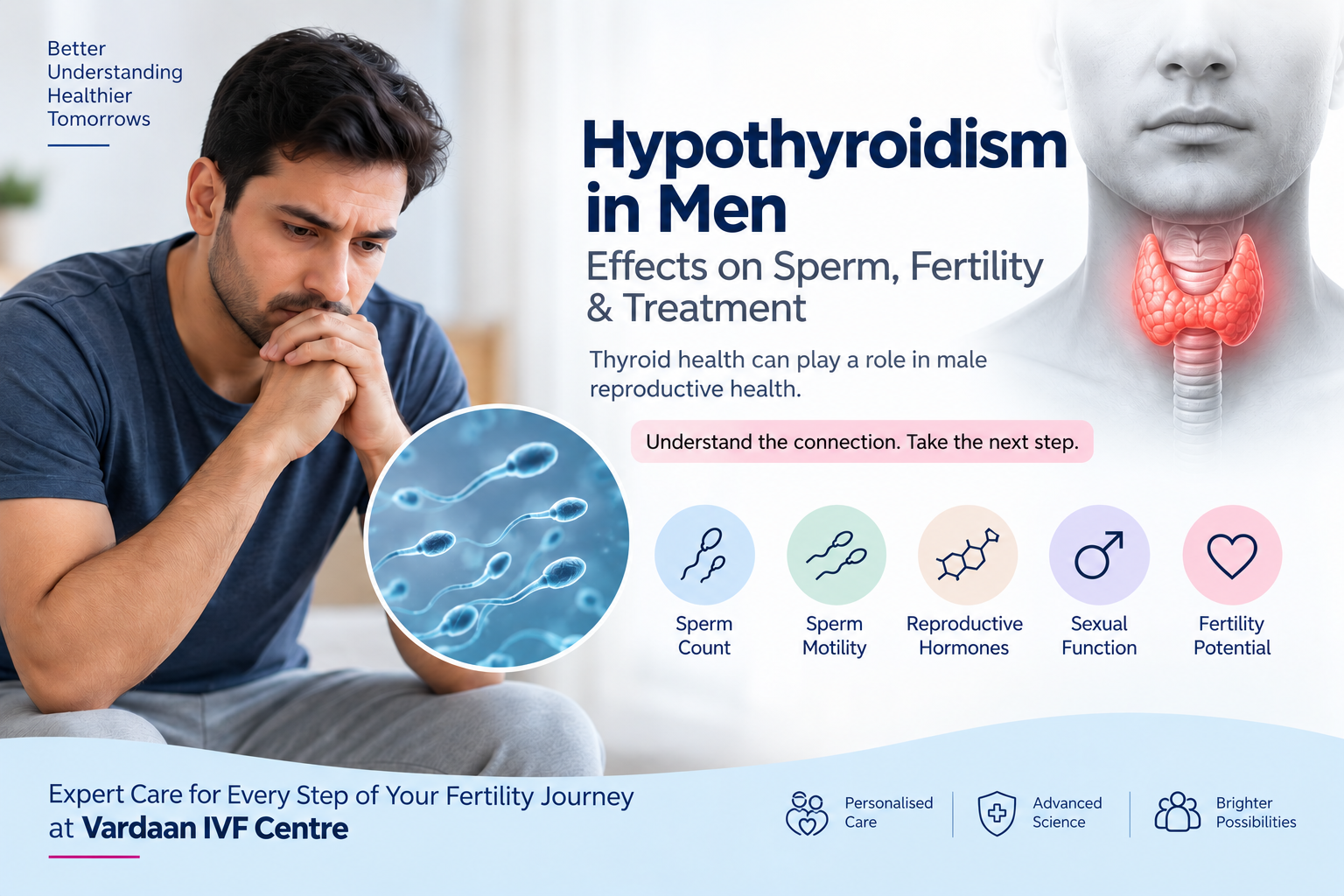
In men, thyroid dysfunction may influence testicular function, testosterone regulation, and sperm development. The effect depends on the severity and duration of thyroid dysfunction. Some men may experience fatigue, low energy, weight changes, or reduced libido. However, these symptoms are not specific to hypothyroidism and cannot confirm a thyroid disorder without appropriate testing. Overt hypothyroidism involves clearly abnormal thyroid hormone levels, while subclinical hypothyroidism generally involves elevated TSH with normal free T4. The reproductive effects appear less consistent in subclinical disease.
Can Thyroid Problems Affect Male Fertility?
Yes. Both hypothyroidism and hyperthyroidism can be associated with changes in male reproductive and sexual function, although the effects vary between individuals. Thyroid dysfunction may influence semen parameters, reproductive hormones, libido, erectile function, or ejaculation.
Hypothyroidism refers to insufficient thyroid hormone production and may be associated with changes in sperm production, sperm motility, libido, and sexual function in some men.
Hyperthyroidism, in which thyroid hormone levels are excessive, may also affect reproductive and sexual function. However, having a thyroid disorder does not mean that a man will necessarily be infertile.
If thyroid dysfunction is suspected during a fertility evaluation, the doctor can consider the man's symptoms, medical history, semen analysis, and appropriate thyroid testing before deciding whether thyroid disease may be contributing to the problem.
Can Hypothyroidism Affect Male Fertility?
Yes, hypothyroidism may affect male fertility by influencing sperm development, sperm quality, reproductive hormones, and sexual function. The effect is not the same for every man, and thyroid dysfunction is only one of several possible causes of male infertility.
Thyroid hormones have a role in the normal functioning of the testes. Research suggests that thyroid hormones may influence testicular function and spermatogenesis, but the strength of the association in humans is not fully established.
One possible example is a man with untreated hypothyroidism who has low sperm motility along with fatigue and reduced libido. In such a case, thyroid dysfunction may be one factor worth investigating. But a semen analysis and broader fertility assessment are still needed to determine what is actually affecting fertility.
How are thyroid and male infertility connected?
The connection mainly involves sperm production, sperm quality, and reproductive hormone regulation. Thyroid dysfunction may influence testicular function, spermatogenesis, reproductive hormones, libido, erectile function and ejaculation. However, the evidence linking hypothyroidism specifically to impaired male fertility remains inconsistent. The relationship is therefore not as simple as “thyroid problem equals infertility.” It is better understood as one potential contributor to male reproductive problems.
Can Hypothyroidism Reduce Sperm Count?
Hypothyroidism may affect sperm production and has been associated with reduced sperm numbers in some men, but it does not cause a low sperm count in every patient.
Sperm production depends on several hormones working together. Because thyroid hormones interact with reproductive hormone pathways and testicular function, significant thyroid dysfunction may interfere with normal spermatogenesis.
Changes in semen parameters, including sperm concentration or total sperm number, have been reported in some men with hypothyroidism. However, findings are not completely consistent, particularly in milder or subclinical thyroid disease. However, findings are not completely consistent, particularly in milder or subclinical thyroid disease. This means the thyroid effect on sperm count should not be assumed from a thyroid diagnosis alone.
For example, if a man with hypothyroidism has a semen analysis showing a low sperm count, his fertility specialist may consider thyroid status alongside other possible causes such as varicocele, hormonal disorders, medications, lifestyle factors, or previous illness. A diagnosis of hypothyroidism does not automatically mean that sperm count will be low. Semen analysis is the primary test used to assess whether sperm production and semen parameters are abnormal.
Can Hypothyroidism Affect Sperm Motility?
Yes, hypothyroidism may reduce sperm motility in some men, although the effect varies between individuals.
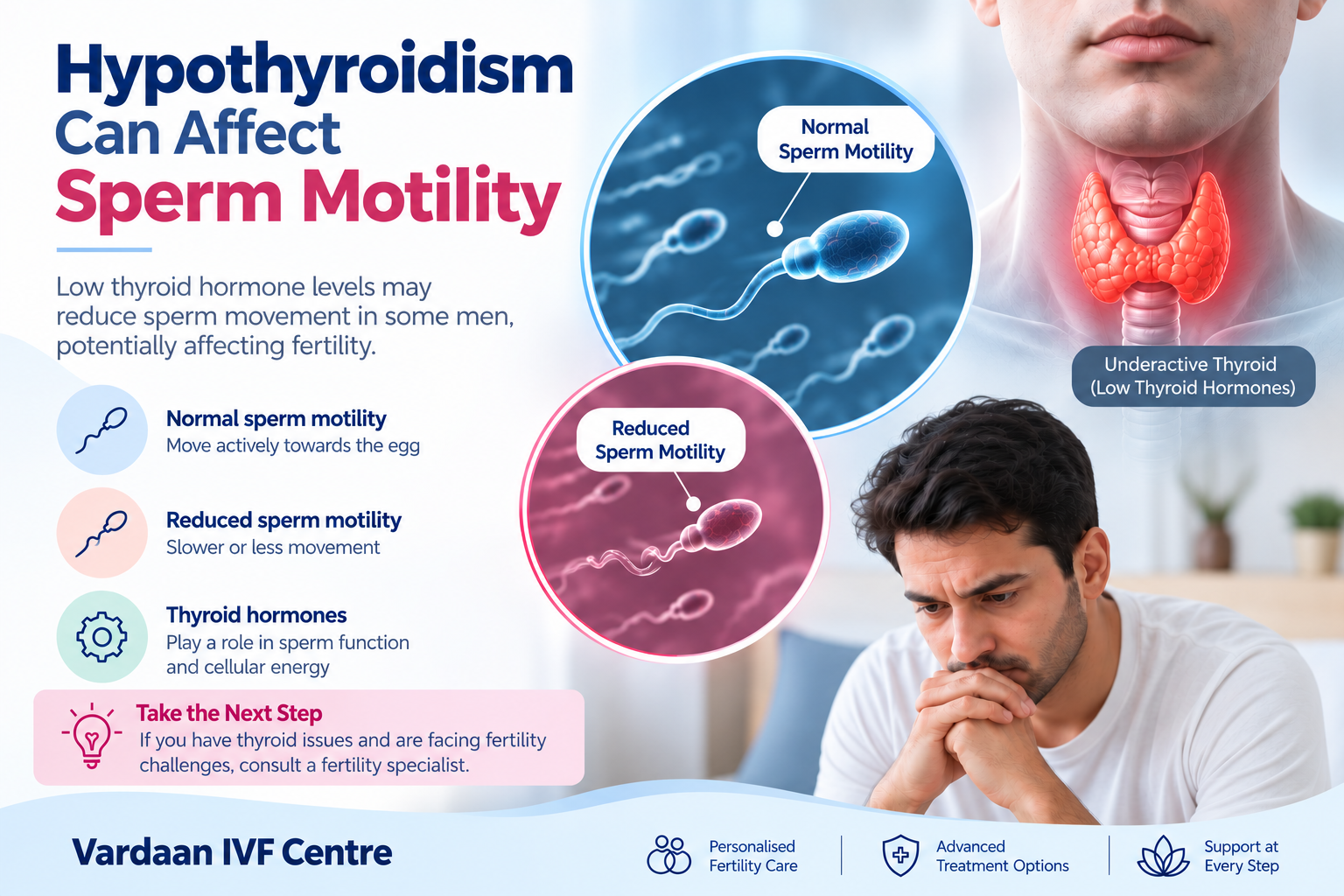
Sperm motility describes how effectively sperm move. Progressive movement is particularly important because sperm need to travel through the female reproductive tract to reach the egg. Thyroid hormones may influence cellular energy production and testicular function, which can affect sperm movement. Studies have reported reduced motility in some men with thyroid dysfunction, particularly more significant or prolonged hypothyroidism.
For example, if semen analysis shows adequate sperm numbers but poor progressive motility, a fertility specialist may investigate hormonal and medical factors, including thyroid function when clinically indicated. It is important to remember that hypothyroidism sperm motility is only one possible relationship. Low motility can also result from varicocele, infections, heat exposure, smoking, certain medications, and other medical or lifestyle factors.
What Other Reproductive Problems Can Thyroid Dysfunction Cause in Men?
Thyroid dysfunction may affect more than sperm count and motility; it can also influence sperm morphology, libido, and sexual function.
Potential reproductive effects include:
Abnormal sperm morphology: Changes in sperm shape and structure may occur in some men.Research has also reported changes in sperm morphology in some men with thyroid dysfunction, although findings across studies are not consistent.
Reduced libido: Low thyroid function can be associated with reduced sexual desire.
Erectile dysfunction: Hormonal and metabolic changes may contribute to sexual-function problems.
Ejaculatory problems: Thyroid dysfunction has been associated with certain ejaculation-related concerns.
Hormonal changes: Thyroid hormones interact with testosterone and other reproductive hormones.
These effects are not inevitable. A man with hypothyroidism may have normal sexual function and semen parameters, while another may have several abnormalities. That is why fertility evaluation should focus on the individual's test results and medical history rather than assuming that thyroid disease is the sole explanation.
Should Men With Infertility Get a Thyroid Test?
Not every man with infertility needs routine thyroid testing. It may be considered when semen parameters are abnormal, sexual or ejaculatory dysfunction is present, or symptoms or medical history suggest thyroid disease.
A fertility evaluation commonly begins with a detailed history and semen analysis, which assesses:
Sperm concentration
Total sperm number
Sperm motility
Sperm morphology
Semen volume
If thyroid dysfunction is suspected, testing may include TSH and, when appropriate, free T4. For example, a man presenting with abnormal semen parameters alongside fatigue, low libido, or a known history of thyroid disease may have a stronger reason for targeted thyroid evaluation than someone with normal semen parameters and no relevant symptoms.
The important point is that thyroid testing should be clinically guided, rather than treated as a mandatory test for every man undergoing fertility evaluation.
Can Treating Hypothyroidism Improve Male Fertility?
Treating confirmed hypothyroidism may improve some reproductive or semen parameters in certain men, but it does not guarantee improved fertility or pregnancy.
When treatment is required, doctors may prescribe thyroid hormone replacement to restore appropriate thyroid hormone levels. Some research has reported improvements in semen parameters after treatment, particularly in men with overt hypothyroidism.
However, fertility is influenced by multiple factors. Correcting thyroid dysfunction may address one potential contributor without resolving problems such as severe sperm abnormalities, varicocele, or genetic factors. Note that thyroid medicines or supplements should not be started without medical advice.
When Should a Man See a Fertility Specialist?
A fertility evaluation is worth considering when pregnancy has not occurred despite regular unprotected intercourse or when there are known or suspected male fertility problems.
Men should particularly consider evaluation when they have:
Low sperm count or motility
Erectile or ejaculation concerns
A known thyroid disorder with fertility concerns
Symptoms suggesting hormonal or thyroid dysfunction
Previous fertility treatment that was unsuccessful
Male and female factors can occur together. Therefore, both partners should be assessed rather than assuming that difficulty conceiving is solely related to the woman.
Can men with thyroid problems undergo IVF or ICSI?
Yes. Men with thyroid disorders can generally undergo fertility treatment such as IVF or ICSI. The fertility team can assess thyroid status alongside semen parameters and other reproductive factors and coordinate medical management when thyroid dysfunction is identified.
Male Fertility Evaluation at Vardaan IVF Centre, Jalandhar
At Vardaan IVF Centre in Jalandhar, male fertility evaluation can include a detailed medical history, semen analysis and targeted hormonal investigations when clinically appropriate. Depending on the findings, the fertility team can discuss whether treatment, further evaluation or assisted reproductive options such as IUI, IVF or ICSI may be appropriate.
If you are trying to conceive and have hypothyroidism, abnormal semen results, low libido or other concerns about male fertility, speak with a fertility specialist to determine whether thyroid function or another factor may be affecting conception. Vardaan IVF Centre, Jalandhar, provides fertility evaluation and assisted reproductive care for couples experiencing infertility.
FAQs
Q. What is Male Fertility?
Male infertility refers to difficulty achieving pregnancy that is related to factors affecting the male reproductive system, such as abnormal sperm production, sperm function, reproductive hormones, or sexual function.
Q. Can hypothyroidism cause male infertility?
Hypothyroidism may contribute to male fertility problems by affecting sperm quality, reproductive hormones, or sexual function. However, it does not automatically cause infertility. Other male and female fertility factors should also be evaluated.
Q. Does hypothyroidism reduce sperm count?
It may affect sperm production in some men, and reduced sperm numbers have been reported with thyroid dysfunction. However, not every man with hypothyroidism has a low sperm count. A semen analysis is needed to determine whether sperm production is actually affected.
Q. Can hypothyroidism affect sperm motility?
Yes. Hypothyroidism may be associated with reduced sperm motility in some men. Since low motility has many possible causes, thyroid function should be considered alongside other medical, hormonal, and lifestyle factors when appropriate.
Q. Can treating hypothyroidism improve sperm quality?
It may. Some men show improvement in semen parameters after appropriate treatment of hypothyroidism. However, the response varies, and treating the thyroid condition alone may not resolve other causes of male infertility.
Q. Should thyroid function be checked during a male infertility evaluation?
Thyroid testing is not automatically required for every man with infertility. A doctor may consider TSH and other thyroid tests when semen parameters, sexual function, symptoms, or medical history suggest that thyroid dysfunction could be relevant.
Sources:
PubMed — Thyroid impairment and male fertility: a narrative review (2024)
PubMed — Thyroid, spermatogenesis, and male infertility
PubMed — The role of hypothyroidism in male infertility and erectile dysfunction
AUA/ASRM Guideline on Diagnosis and Treatment of Infertility in Men