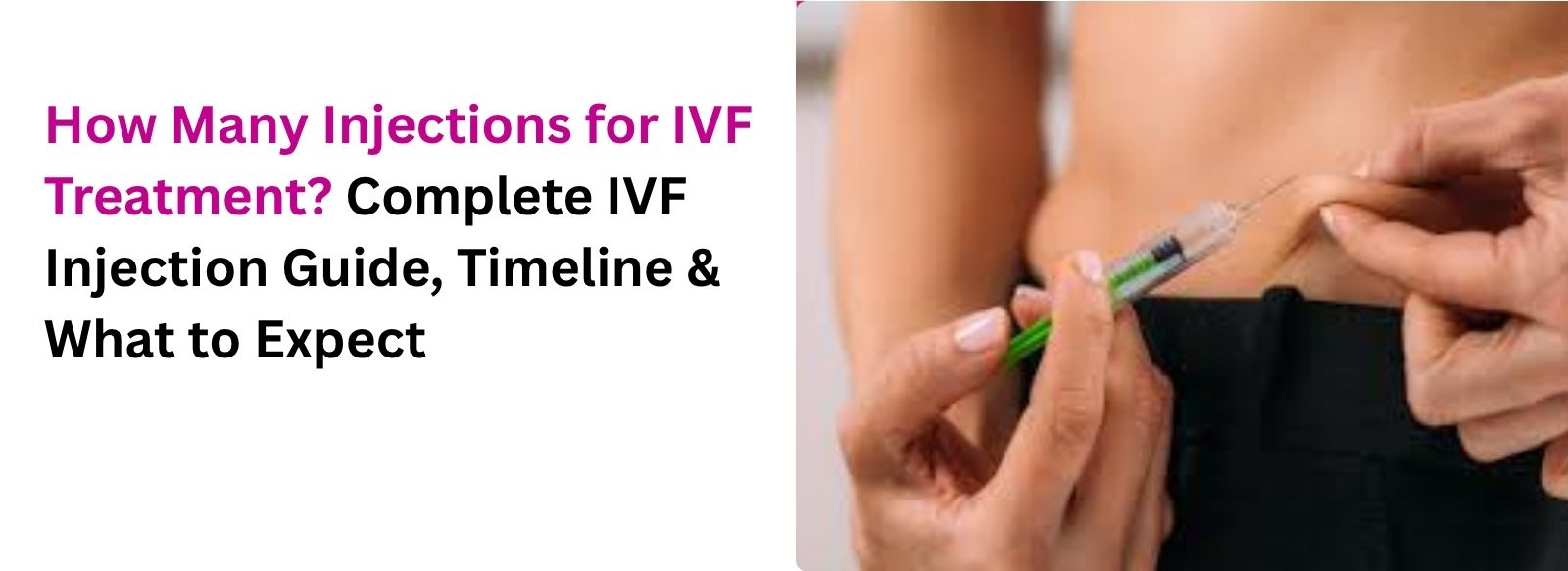
How Many Injections for IVF Treatment?
Starting IVF (In Vitro Fertilization) can be both exciting and overwhelming. One of the biggest concerns for couples beginning fertility treatment is, "How many injections are needed for IVF treatment?" It’s natural to feel anxious about daily injections, especially if you’ve never had to take hormone medications before.
The good news is that IVF injections are a routine part of the treatment process, and most patients find them easier to manage than they initially expected. These injections are carefully planned to stimulate the ovaries, support healthy egg development, prevent premature ovulation, and prepare the body for embryo implantation. Each injection plays an important role in improving the chances of a successful pregnancy.
The exact number of injections varies from one person to another. Factors such as age, ovarian reserve, hormone levels, body weight, previous IVF history, and the type of IVF protocol selected by your fertility specialist all influence the total number of injections required. While some women may need around 20 injections, others may receive 40 to 60 injections during a single IVF cycle.
In this detailed guide, you'll learn everything about IVF injections, including why they are necessary, how many injections are typically required, the different types of medications used, possible side effects, and practical tips to make the process more comfortable.
How Many Injections Are Needed for IVF Treatment?
There is no universal number because every IVF cycle is personalized. However, on average:
IVF Protocol | Approximate Number of Injections |
|---|---|
Mild IVF | 15–25 injections |
Standard IVF | 25–40 injections |
Long IVF Protocol | 40–60+ injections |
These injections may include:
Ovarian stimulation injections
Ovulation suppression injections
Trigger shot
Progesterone support injections (in some cases)
The total number depends on how your ovaries respond to the medications and whether additional hormonal support is required after embryo transfer.
Why Are IVF Injections Necessary?
To understand why IVF requires injections, it helps to know how a natural menstrual cycle works.
In a typical menstrual cycle, a woman usually develops one mature egg that is released during ovulation. While this is sufficient for natural conception, IVF aims to increase the chances of pregnancy by collecting multiple mature eggs in a single cycle.
More eggs can lead to:
More embryos for fertilization
Better embryo selection
Higher chances of successful implantation
Opportunity to freeze extra healthy embryos for future use
This process cannot happen naturally, which is why fertility medications are used to stimulate the ovaries.
IVF injections contain hormones that encourage several follicles to grow simultaneously instead of allowing only one egg to mature.
Without these medications, doctors would retrieve very few eggs, reducing the overall success rate of the IVF cycle.
What Determines the Number of IVF Injections?
Every patient receives a personalized IVF treatment plan based on several medical factors. Fertility specialists carefully evaluate your reproductive health before deciding on the medication dosage and injection schedule.
Some of the most important factors include:
1. Your Age
Age plays a major role in fertility treatment.
Women under the age of 35 generally respond well to ovarian stimulation and may require fewer medications.
Women over 35, particularly those over 40, may need higher doses or additional injections because ovarian reserve naturally declines with age.
2. Ovarian Reserve
Ovarian reserve refers to the number and quality of eggs remaining in the ovaries.
Doctors assess ovarian reserve using tests such as:
AMH (Anti-Müllerian Hormone)
AFC (Antral Follicle Count)
FSH blood test
Women with a lower ovarian reserve often require stronger stimulation protocols and additional injections.
3. IVF Protocol
Different IVF protocols involve different medication schedules.
Some commonly used protocols include:
Long Protocol
Uses hormone suppression before ovarian stimulation.
Usually requires more injections but offers better cycle control for many patients.
Antagonist Protocol
One of the most commonly used IVF protocols today.
Typically requires fewer injections and has a shorter treatment duration.
Mild IVF
Uses lower medication doses and fewer injections.
This protocol is suitable for selected patients based on their fertility profile.
4. Response to Medication
Not every woman's ovaries respond in the same way.
During treatment, doctors monitor follicle growth through:
Ultrasound scans
Blood hormone tests
If the ovaries are responding slowly, medication doses may be increased. If they respond too quickly, doses may be reduced to lower the risk of Ovarian Hyperstimulation Syndrome (OHSS).
This individualized approach helps maximize safety while improving treatment outcomes.
Types of IVF Injections and Their Purpose
Understanding what each injection does can make the treatment process feel much less intimidating.
1. Ovarian Stimulation Injections
These are the first injections you'll usually receive.
Their purpose is to stimulate multiple follicles so that several mature eggs develop during one menstrual cycle.
Common medications include:
Gonal-F
Follistim
Puregon
Menopur
These injections are generally taken once daily for 8 to 12 days, depending on how the ovaries respond.
This stage accounts for the majority of IVF injections.
2. GnRH Antagonist Injections
As the follicles grow, your body may naturally prepare for ovulation.
However, releasing the eggs before the planned egg retrieval would cancel the IVF cycle.
GnRH antagonist injections help prevent premature ovulation, allowing the fertility specialist to retrieve the eggs at the optimal time.
Common medications include:
Cetrotide
Ganirelix
These injections are usually started midway through ovarian stimulation and continue until the trigger shot.
3. Trigger Shot
The trigger injection is one of the most important steps in the IVF process.
It helps the eggs complete their final stage of maturation before retrieval.
The trigger shot is given approximately 34 to 36 hours before egg retrieval, and timing is extremely important. Even a small delay can affect the success of the procedure.
Unlike the stimulation medications, the trigger shot is usually just one injection.
4. Progesterone Support
After egg retrieval and embryo transfer, progesterone helps prepare the uterine lining for implantation and supports early pregnancy.
Depending on your clinic’s protocol, progesterone may be prescribed as:
Intramuscular injections
Vaginal gel
Vaginal suppositories
Oral medication (in selected cases)
Some patients continue progesterone support until the pregnancy test, while others may continue it for several weeks if pregnancy is confirmed.
Does Every Woman Receive the Same IVF Injections?
No.
One of the most common misconceptions is that all IVF patients follow the same medication schedule.
In reality, fertility treatment is highly personalized.
For example:
A 28-year-old woman with excellent ovarian reserve may need fewer injections.
A 39-year-old woman with diminished ovarian reserve may require higher doses and a longer stimulation period.
Women with Polycystic Ovary Syndrome (PCOS) often receive modified protocols to reduce the risk of OHSS.
Patients with previous failed IVF cycles may receive a completely different medication plan to improve outcomes.
Because of these differences, it’s important not to compare your treatment with someone else’s. Your fertility specialist will tailor the injections to your specific medical needs.
1. How many injections are needed for IVF treatment?
Most women need 20 to 60 IVF injections during one treatment cycle. The exact number depends on factors such as age, ovarian reserve, hormone levels, and the IVF protocol recommended by the fertility specialist.
2. Are IVF injections painful?
Most IVF injections cause only mild discomfort because they use small needles. Some women may experience slight stinging, redness, or bruising at the injection site, but the pain is usually temporary.
3. How many days do IVF injections last?
The IVF injection schedule usually lasts 8 to 12 days for ovarian stimulation. Some women may continue progesterone injections or other hormone support after embryo transfer, depending on their treatment plan.
4. What are the different types of IVF injections?
The main IVF treatment injections include ovarian stimulation injections, GnRH antagonist injections to prevent premature ovulation, the trigger shot before egg retrieval, and progesterone injections to support pregnancy after embryo transfer.
5. Why are IVF hormone injections necessary?
IVF hormone injections stimulate the ovaries to produce multiple mature eggs instead of the single egg released during a natural cycle. This increases the chances of successful fertilization and healthy embryo development.
6. Can I give myself IVF injections at home?
Yes. Most IVF medication injections are designed for self-administration. Your fertility clinic will provide training on how to prepare and safely inject the medication at home.
7. What happens if I miss an IVF injection?
Missing an IVF injection may affect follicle growth or the timing of egg retrieval. If you miss a dose, contact your fertility specialist immediately and follow their instructions. Never double your next dose unless advised.
8. Where are IVF injections usually given?
Most IVF injections are administered into the fatty tissue of the lower abdomen. Some medications, such as progesterone, may be given in the upper outer buttock or thigh, depending on the prescription.
9. What are the common side effects of IVF injections?
Common IVF injection side effects include bloating, mild abdominal discomfort, headaches, mood changes, breast tenderness, fatigue, and temporary redness or bruising at the injection site. Serious side effects are uncommon but require prompt medical attention.
10. Do more IVF injections increase IVF success rates?
No. The number of IVF injections does not directly determine the IVF success rate. Success depends on factors such as age, egg quality, sperm quality, embryo quality, uterine health, and the expertise of the fertility team.
11. Can IVF treatment be done without injections?
In most cases, IVF treatment requires hormone injections to stimulate the ovaries effectively. Some mild IVF protocols may include oral medications, but injections remain the standard approach for achieving the best results.
12. How long after IVF injections is egg retrieval performed?
The egg retrieval procedure is usually scheduled 34 to 36 hours after the trigger shot. This timing is carefully planned to collect mature eggs before natural ovulation occurs.
13. How much do IVF injections cost in India?
The cost of IVF injections in India varies depending on the medication brand, dosage, clinic, and individual treatment plan. Fertility medications often make up a significant portion of the total IVF treatment cost.
14. Are IVF injections safe?
Yes. IVF injections are considered safe when prescribed and monitored by an experienced fertility specialist. Regular ultrasounds and blood tests help ensure the medications are working effectively while minimizing risks.
15. What should I avoid during IVF injections?
During IVF treatment, avoid smoking, alcohol, recreational drugs, strenuous exercise, and missing medication doses. Follow your fertility specialist's instructions regarding diet, hydration, and activity to support the best possible outcome.