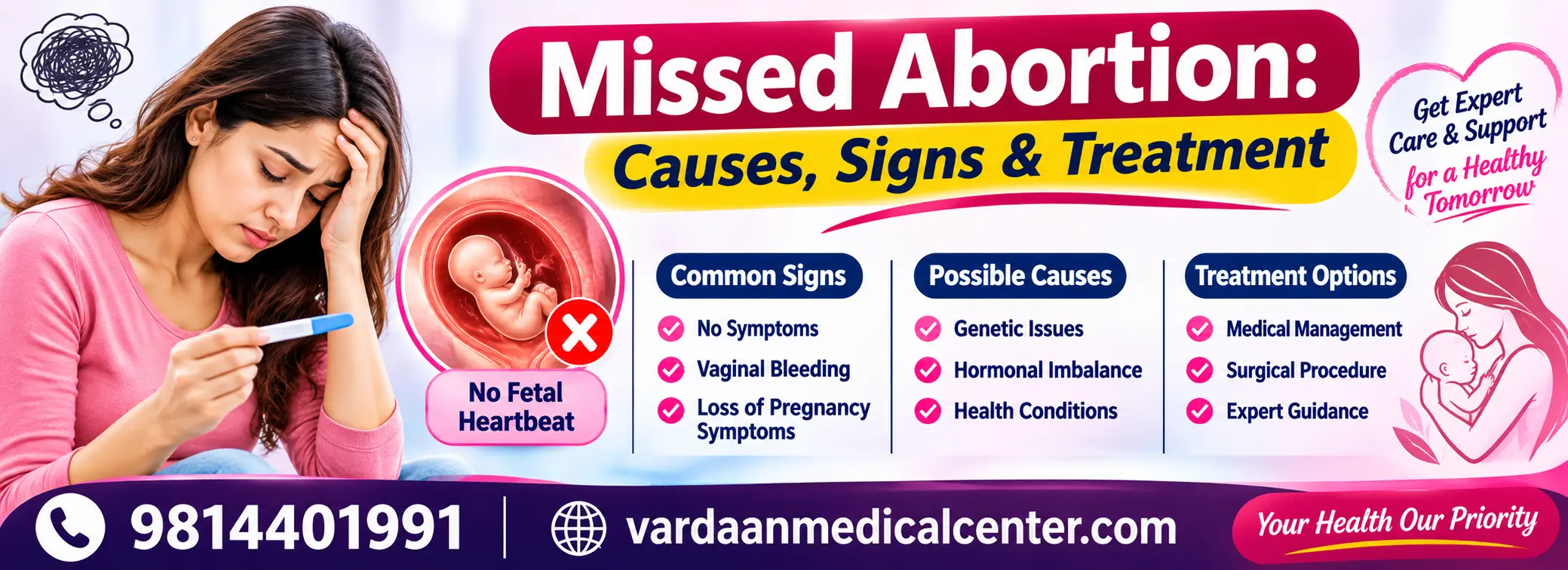

A missed abortion, also called a missed miscarriage, happens when a pregnancy stops growing, but your body doesn't show any signs of it. The baby may not have formed or may have stopped growing, but the pregnancy tissue is still inside the womb. Do not let the word "abortion" confuse you. It has nothing to do with choosing to end a pregnancy, and it is just the medical name doctors use for a miscarriage. It is called "missed" because there is usually no bleeding or pain, so most women feel completely normal and only find out during a routine scan.
Hearing this news can be heartbreaking, especially when everything seemed fine. But one early scan without a heartbeat doesn't always mean you've had a miscarriage. Sometimes it is simply too early to see the heartbeat. Your doctor will check how many weeks pregnant you are, when you ovulated, and your scan details, and may repeat the scan after a few days before confirming anything.
What Is a Missed Abortion?
A missed abortion is an early pregnancy loss where the pregnancy has stopped growing, but the body hasn't passed out the pregnancy tissue yet. Many women have no bleeding or pain, and some may still feel pregnant, with symptoms like nausea or sore breasts.
An ultrasound scan is the main way to find out if this has happened. In a healthy early pregnancy, the scan shows growth step by step-
First, the pregnancy sac becomes visible in the womb.
Next, a small sac called the yolk sac appears inside it, which feeds the baby in the early weeks.
Then the tiny embryo starts to form.
Finally, the baby's heartbeat can be seen as the embryo grows.
The baby's heartbeat usually shows on a scan around the 6th week, but timing can vary if you ovulated late. A test tube baby center in Jalandhar can guide you with the right scans at the right time.
No Heartbeat on the First Scan: Does It Mean Miscarriage?
Not always. If the scan shows the pregnancy sac but no heartbeat yet, it may just be too early. Women with longer cycles often ovulate later, so the baby may be younger than your period dates suggest.
That's why doctors usually repeat the scan after about 7 days instead of confirming a loss right away. Waiting doesn't harm a healthy pregnancy and helps avoid a wrong diagnosis.
Many couples also ask, can a missed abortion happen after a heartbeat is seen? Yes, but it's less common, and the chances of a healthy pregnancy go up a lot once a heartbeat appears.
When Can a Missed Miscarriage Be Confirmed?
Doctors don't confirm a missed miscarriage based on your period dates alone. They follow clear scan guidelines. For example, on an internal (vaginal) ultrasound, a miscarriage can be confirmed if:
The embryo measures 7 mm or more but has no heartbeat, or
The pregnancy sac measures 25 mm or more but has no embryo inside.
In some cases, your doctor may still suggest a repeat scan or a second opinion. These careful rules are there for one simple reason: to make sure a pregnancy that could still be healthy is never wrongly called a miscarriage.
What Causes a Missed Abortion?
A healthy pregnancy depends on three things: the embryo's genes, the womb, and the mother's health.
1. Chromosome Problems in the Embryo
This is the most common cause. Sometimes an egg or sperm carries faulty genetic material, so the embryo can't grow normally. It usually happens by chance and is not anyone's fault.
2. Problems in the Womb
The shape of the womb, such as a wall of tissue dividing it (septate uterus), can make it harder for the pregnancy to settle and grow.
3. The Mother's Health
Some conditions can raise the risk if not well controlled:
Diabetes
Thyroid problems
Being very overweight
Severe anemia
Autoimmune or blood clotting disorders
With the right treatment, many women go on to have a healthy pregnancy. A trusted IVF center in Jalandhar can help find the cause and plan your next pregnancy.
Signs of a Missed Miscarriage
A missed miscarriage is hard to notice because there are often no clear signs. But some women do notice a few missed abortion symptoms, such as:
Pregnancy symptoms like nausea or sore breasts suddenly fade or go away.
Light spotting or brown discharge.
Mild pain or cramps in the lower tummy, without heavy bleeding.
No heartbeat or growth seen on the ultrasound.
Keep in mind that these changes don't always mean a miscarriage. Only a doctor can confirm it, usually with an ultrasound.
What Treatment Options Are Available?
There are three main ways to treat a missed miscarriage. Your doctor will explain each one and help you choose what suits you best.
Waiting for It to Happen Naturally
This is a wait-and-watch approach. In many women, the body passes the pregnancy tissue on its own over time. If this doesn't happen, medicine or a small procedure may be needed.
Medicine
Your doctor may give you a medicine called misoprostol, which helps your body pass the remaining tissue. It causes cramps and bleeding, sometimes with clots, much like a heavy period. You usually take it at the clinic and then rest at home, and most women pass the tissue within a few hours.
A Small Procedure (D&C)
In a D&C, the doctor gently removes the remaining tissue from the womb. It may be done soon after diagnosis or later if the tissue doesn't pass on its own or with medicine.
At a trusted IVF hospital in Jalandhar, your doctor can guide you through the safest option and help you plan for a healthy pregnancy in the future.
What Should You Do If the Scan Shows No Heartbeat?
Don't make a decision based on one report alone, unless the scan clearly confirms a pregnancy loss. Your doctor may:
Check your period and ovulation dates
Review the scan measurements carefully
Repeat the scan after a few days
Keep an eye on your symptoms
Check for any health problems that may affect pregnancy
Suggest treatment if a miscarriage is confirmed
Get medical help right away if you have heavy bleeding, severe tummy pain, dizziness, fainting, fever, or feel very weak.
When Should You Consult a Fertility Specialist?
After one miscarriage, your next pregnancy can still go well. But it's a good idea to see a specialist if you've had repeated miscarriages, trouble getting pregnant, a known womb problem, are older, or have a health condition that may affect pregnancy. Choose a doctor who checks both partners, not just the loss.
When looking for an IVF clinic in Jalandhar, don't go by ads or rankings alone. Look for experienced doctors, good testing facilities, a quality lab, and honest counselling.