The two-week wait after IVF embryo transfer can feel emotionally long. Many couples closely observe every body change and wonder whether it is among the positive signs after embryo transfer. A mild cramp, white discharge, breast tenderness, tiredness, or even no symptoms at all may create hope or anxiety.
In Punjab, patients often ask, “Embryo transfer to baad pregnancy de signs kehde hunde ne?” The clinical answer is like this: symptoms alone cannot confirm implantation. The scheduled Beta-hCG blood test remains the most reliable way to check whether pregnancy has started.
What Happens After an Embryo Transfer?
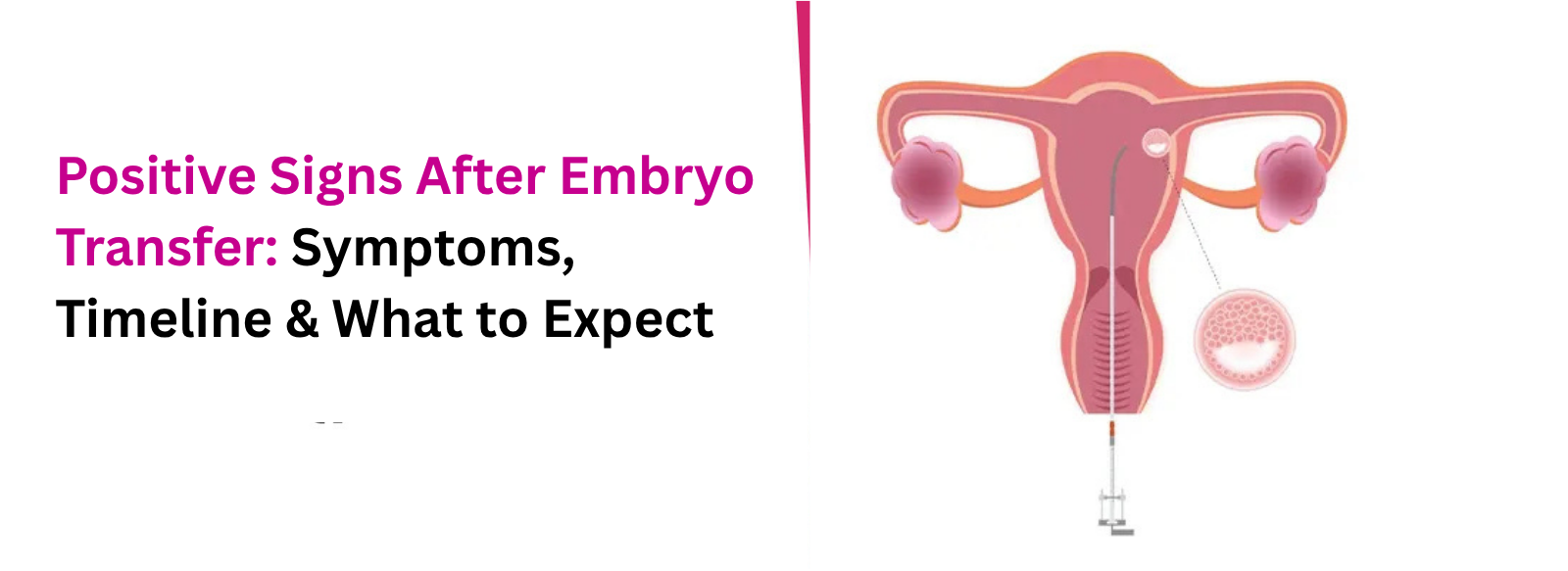
During IVF, the fertility team places a carefully selected embryo inside the uterus. The embryo must then continue developing, hatch from its outer layer, attach to the uterine lining, and begin implantation.
If implantation progresses successfully, the developing embryo starts producing human chorionic gonadotropin (hCG). This hormone gradually increases and becomes detectable through a blood test.
However, implantation does not always produce noticeable symptoms. Some women experience mild changes, while others feel completely normal and still receive a positive pregnancy result.
This creates what fertility specialists often call the symptom paradox:
“You may experience several symptoms without being pregnant, and you may experience no symptoms despite a successful implantation.”
Progesterone and estrogen medicines can also cause many of the same symptoms associated with early pregnancy. Therefore, doctors do not use symptoms alone to judge IVF success.
Positive Signs After Embryo Transfer: Common Symptoms
Look for these positive signs after embryo implantation or transfer.
1. Light Pink or Brown Spotting
Light spotting can occur during the implantation period. It may appear as:
A few pink spots
Light brown discharge
Mild staining on underwear
Very light bleeding that lasts for a few hours or up to one or two days
During implantation, the embryo interacts with the endometrial lining, and small blood vessels may become disturbed. However, not every successful pregnancy causes implantation spotting.
Many women ask, “Embryo transfer ke baad spotting hona good sign hai kya?” It can occur during a successful implantation, but it does not confirm pregnancy on its own.
You should contact your IVF clinic if bleeding becomes heavy, bright red, contains clots, or increases continuously.
2. Mild Lower-Abdominal Cramping or Pulling Sensation
Some women experience mild cramps, pelvic pressure, or a pulling sensation after embryo transfer. The feeling may resemble mild menstrual cramps and may occur in the lower abdomen or lower back.
Patients in Punjab may describe this as:
“Pet vich halka jeha khichav ho reha hai.”
“Embryo transfer ke baad period jaisa dard ho raha hai.”
Mild cramping may occur because of hormonal changes, uterine activity, or the body's response to treatment. It does not necessarily indicate either success or failure. Seek medical advice if pain becomes:
Severe or sharp
Persistent and worsening
Strongly present on one side
Associated with heavy bleeding, dizziness, breathing difficulty, or significant abdominal swelling
3. Increased White or Clear Vaginal Discharge
An increase in clear, white, or slightly thick discharge may occur after embryo transfer. Estrogen and progesterone can change cervical mucus and increase vaginal secretions. Normal discharge is generally:
White or clear
Mild or without odour
Not associated with itching or burning
If the discharge becomes foul-smelling, greenish, yellow, or causes irritation, contact your doctor because an infection may require evaluation.
4. Breast Tenderness or Swelling
Breast heaviness, tenderness, swelling, or nipple sensitivity may develop during the two-week wait. These changes may result from:
Progesterone support
Estrogen medication
Early hormonal changes after implantation
Some women also notice increased nipple sensitivity or darker areolas. However, breast symptoms cannot confirm pregnancy because IVF medicines commonly produce similar effects.
5. Fatigue or Increased Sleepiness
Feeling unusually tired may occur after embryo transfer. Progesterone can have a calming or sedating effect and may make you feel sleepy during the day.
Early pregnancy can also cause fatigue, but the symptom overlaps significantly with medication effects, emotional stress, changes in routine, and reduced physical activity.
If you feel tired, follow your clinic's instructions, maintain adequate hydration, eat balanced meals, and avoid overexertion.
6. Bloating and Constipation
Progesterone can slow the movement of the digestive system. As a result, some women experience:
Bloating
Constipation
A feeling of fullness
Mild abdominal discomfort
Increased gas
These symptoms are common during IVF treatment and are not reliable indicators of implantation.
Include fibre-rich foods, fruits, vegetables, and adequate fluids unless your doctor has advised a specific diet. Avoid taking laxatives or supplements without consulting your fertility specialist.
7. Metallic Taste in the Mouth
Some women notice a metallic or unusual taste in the mouth during early pregnancy. Hormonal changes may alter taste perception.
However, this symptom usually appears later and is not a dependable early sign after embryo transfer. Medication, dietary changes, or other factors may also affect taste.
8. Frequent Urination
Some women notice increased urination during the later part of the two-week wait. Early hormonal changes may contribute, but increased fluid intake, anxiety, or medication can also play a role.
Frequent urination with burning, pain, fever, or lower abdominal discomfort requires medical evaluation because it may indicate a urinary infection.
9. Mild Nausea or Food Sensitivity
Some women experience mild nausea, food aversion, or increased sensitivity to smells. However, pregnancy-related nausea often develops after the pregnancy hormone rises further and may not appear during the earliest days after embryo transfer.
Do not worry if you have no nausea. Many healthy pregnancies begin without early morning sickness.
Can No Symptoms Still Mean a Positive Pregnancy?
Yes. No symptoms after embryo transfer can still result in a positive pregnancy test.
Some women feel completely normal throughout the two-week wait and later receive a positive Beta-hCG result. Others experience multiple symptoms but receive a negative result because progesterone can mimic early pregnancy signs.
Online fertility forums often include comments such as, “I had no symptoms after embryo transfer but my Beta-hCG was positive.” These experiences can provide emotional reassurance, but they cannot predict an individual outcome.
Every IVF cycle differs. Your embryo quality, uterine environment, hormone support, treatment protocol, and individual response may affect how you feel after transfer.
Embryo Transfer Symptoms: Day-by-Day Timeline
The timing depends on whether the clinic transfers a Day 3 embryo or a Day 5 blastocyst. The following timeline provides a general guide and may vary between patients.
Days 1–3 After Embryo Transfer
Most women do not experience pregnancy-related symptoms during this period. You may notice:
Mild cramps
Bloating
Vaginal discharge
Fatigue
Breast tenderness
These symptoms often relate to progesterone or other medicines.
Days 4–6 After Embryo Transfer
If a blastocyst transfer was performed, the embryo may continue attaching to the uterine lining during this period. Possible symptoms include:
Mild pelvic twinges
Light pulling sensation
Mild fatigue
No symptoms at all
The absence of symptoms remains completely normal.
Days 6–10 After Embryo Transfer
Some women may notice:
Light pink or brown spotting
Mild cramps
Increased discharge
Breast sensitivity
Tiredness
However, these changes still cannot confirm implantation.
Days 10–14 After Embryo Transfer
The fertility clinic may schedule a quantitative serum Beta-hCG blood test during this period, depending on the type of embryo transfer and the clinic's protocol.
If implantation has occurred, hCG levels may become detectable. Your doctor may repeat the test after approximately 48 hours to assess the trend.
What is the Most Reliable Sign of Pregnancy After Embryo Transfer?
The most reliable early confirmation is a quantitative serum Beta-hCG blood test performed on the date advised by your IVF specialist. The test measures the amount of hCG in the blood. Doctors interpret the result according to:
The day of embryo transfer
Whether a Day 3 embryo or Day 5 blastocyst was transferred
The initial hCG value
The change in hCG levels over time
Your clinical history
A single value does not provide the complete picture. In many cases, the doctor repeats the test after approximately 48 hours to evaluate whether the hormone level is rising appropriately.
Do not compare your hCG number directly with another patient's result. Pregnancy hormone levels can vary considerably between healthy pregnancies.
Should You Take a Home Pregnancy Test After Embryo Transfer?
Avoid taking an early home urine pregnancy test unless your IVF doctor specifically recommends it. Testing too early may create confusion because:
An hCG trigger injection may remain detectable and produce a false-positive result.
Testing before implantation may produce a false-negative result.
Urine concentration can affect the result.
Different test kits have different sensitivity levels.
A negative home test before the scheduled blood test does not always mean that the IVF cycle has failed. Follow the testing date provided by your clinic and rely on the quantitative Beta-hCG result for accurate assessment.
Do Not Stop IVF Medicines Based on Symptoms
Continue progesterone, estrogen, injections, vaginal pessaries, gels, or other prescribed medicines exactly as directed.
Do not stop medication because:
You have no symptoms.
You experience mild spotting.
You feel period-like cramps.
An early home pregnancy test appears negative.
The fertility team may adjust or discontinue medication only after reviewing your test results and clinical condition.
At Vardaan Infertility & Test Tube Baby Center, the fertility team guides patients through the post-transfer period with personalised follow-up and clear instructions. With IVF centres in Jalandhar and Amritsar, the team supports couples throughout each stage rather than asking them to interpret symptoms alone.
Which Symptoms Need Immediate Medical Attention?
Contact your IVF doctor or clinic promptly if you experience:
Heavy vaginal bleeding
Bleeding that soaks a sanitary pad quickly
Large blood clots
Severe or worsening abdominal pain
Sharp pain on one side
Significant abdominal swelling
Rapid weight gain
Shortness of breath
Persistent vomiting
Fever above 38°C or 100.4°F
Foul-smelling vaginal discharge
Severe weakness, dizziness, or fainting
These symptoms require medical assessment. They should not be managed through online advice or home remedies.
What Should You Do During the Two-Week Wait?
Follow your IVF clinic's instructions and maintain a balanced routine. You can generally:
Take prescribed medicines on time.
Eat regular, nutritious meals.
Drink adequate water.
Continue gentle daily activity if your doctor permits.
Sleep adequately.
Avoid smoking, alcohol, and recreational substances.
Attend scheduled follow-up appointments.
Avoid:
Starting new medicines without approval.
Taking herbal remedies without informing your doctor.
Performing strenuous exercise unless cleared by the clinic.
Repeatedly testing with home pregnancy kits.
Comparing your symptoms with other IVF patients.
Strict bed rest is not routinely necessary for every patient. Follow the individual advice given by your fertility specialist.
When Should You Consult the Best IVF Doctor in Punjab?
You should consult an experienced fertility specialist when you need clear guidance after embryo transfer, especially if you experience concerning symptoms, repeated IVF failure, recurrent implantation failure, or uncertainty about your treatment plan.
Choosing the best IVF doctor in Punjab involves more than checking success-rate claims. Look for:
Experience in reproductive medicine
Individualised treatment planning
Transparent communication
Advanced embryology support
Appropriate diagnostic evaluation
Ethical and evidence-based care
Clear post-transfer follow-up
At Vardaan Infertility & Test Tube Baby Center, Dr. Vareesh Kumar, Founder, Director, and Chief IVF Specialist, leads a team focused on advanced fertility care and personalised treatment. With more than 24 years of experience in obstetrics and gynaecology across Punjab, the clinical vision behind Vardaan developed from recognising the need for accessible and advanced fertility support.
The centre has helped more than 30,000 couples through fertility guidance and treatment, with modern IVF facilities in Jalandhar and Amritsar.
Frequently Asked Questions
Is mild cramping a positive sign after embryo transfer?
Mild cramping may occur after embryo transfer and can result from hormonal medicines, uterine activity, or other treatment-related changes. It does not confirm pregnancy. Severe or worsening pain requires medical advice.
Is white discharge after embryo transfer normal?
Clear or white, odourless discharge may occur because of hormonal changes or vaginal progesterone. Contact your doctor if the discharge smells unpleasant, changes colour, or causes itching or burning.
Can implantation happen without spotting?
Yes. Many successful pregnancies occur without implantation spotting. The absence of spotting does not indicate IVF failure.
Is breast pain a positive sign after embryo transfer?
Breast tenderness may occur during early pregnancy, but progesterone and estrogen medicines can cause the same symptom. Therefore, breast pain alone cannot confirm implantation.
I have no symptoms after embryo transfer. Should I worry?
No. Many women have no noticeable symptoms during the two-week wait and still receive a positive Beta-hCG result. Continue your prescribed medicines and wait for the scheduled blood test.
When should I take the Beta-hCG test?
Follow the date provided by your IVF clinic. Many clinics schedule the test approximately 10–14 days after embryo transfer, depending on the embryo stage and treatment protocol.
Can I stop progesterone after a negative home pregnancy test?
No. Do not stop progesterone or other IVF medicines without your doctor's instructions. An early home test may provide an inaccurate result.
Is light bleeding after embryo transfer always implantation bleeding?
No. Light bleeding may have several causes, including cervical irritation, vaginal medication, hormonal changes, or implantation. Your fertility specialist should evaluate persistent or increasing bleeding.
Conclusion
The positive signs after embryo transfer include light spotting, mild cramps, breast tenderness, fatigue, increased discharge, or subtle hormonal changes. However, these symptoms overlap with the effects of progesterone and other IVF medicines.
The most important point is this: symptoms cannot confirm IVF success, and no symptoms do not mean IVF failure.
Continue your prescribed medication, follow your clinic's instructions, avoid early self-testing, and complete the scheduled Beta-hCG blood test. If you experience heavy bleeding, severe pain, breathing difficulty, fever, or significant abdominal swelling, contact your IVF team immediately.
For personalised fertility guidance and advanced IVF care, consult an experienced fertility specialist at Vardaan IVF Hospital in Jalandhar or Amritsar.
[Book Your Appointment]
Medical disclaimer: This article provides general educational information and does not replace personalised medical advice. IVF treatment and post-transfer care vary according to the patient's medical history and treatment protocol. Always follow the instructions provided by your fertility specialist.