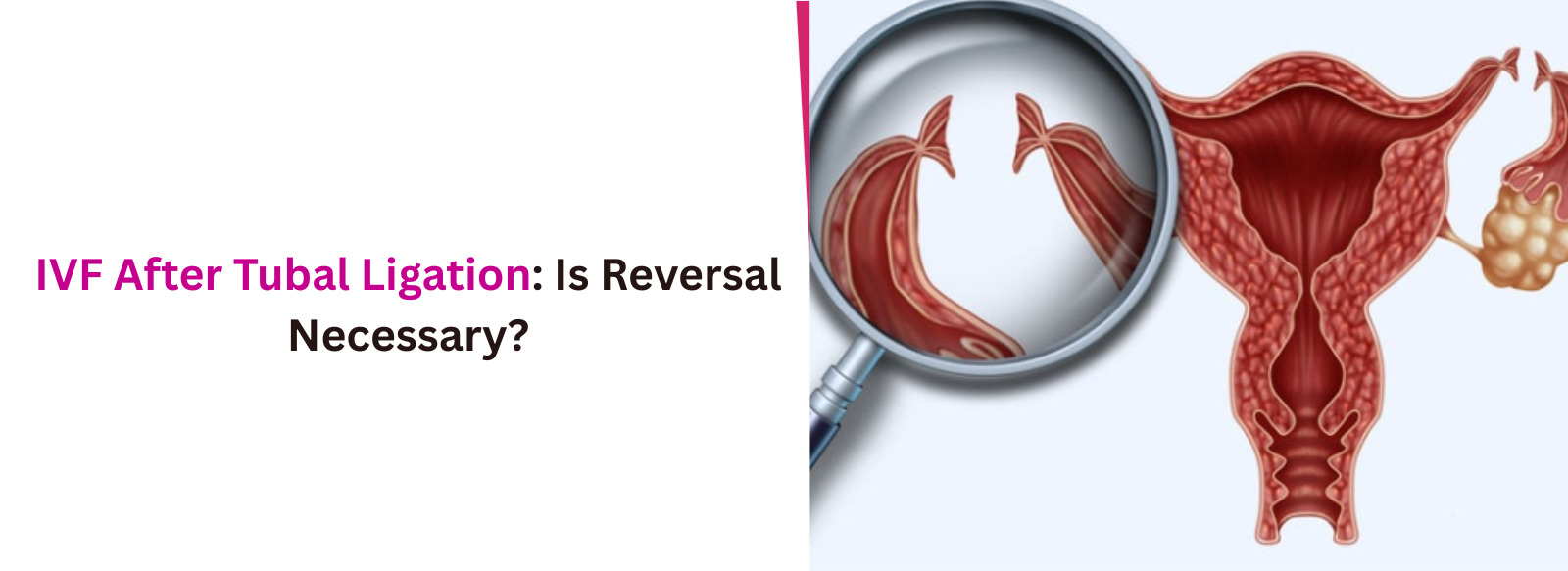
IVF after tubal ligation does NOT require tubal reversal, because IVF completely bypasses the fallopian tubes and allows pregnancy without restoring them.
Tubal ligation is considered a permanent method of birth control, but life circumstances and fertility goals can change over time. Many women who previously chose sterilization later wish to conceive again, often due to remarriage, loss of a child, or a change in personal priorities.
This leads to a very common and important question: Is tubal reversal necessary before IVF, or can pregnancy happen without undoing the ligation?
This article explains how tubal ligation affects fertility, how IVF works in such cases, and whether tubal reversal is medically required or even recommended before pursuing IVF.
What Is Tubal Ligation, and How Does It Affect Fertility?
Tubal ligation is a surgical procedure in which the fallopian tubes are cut, tied, clipped, or sealed to prevent pregnancy. The fallopian tubes play a critical role in natural conception, as they are the pathway where sperm meets the egg and fertilization occurs.
When tubal ligation is performed:
The ovaries continue to release eggs
Hormonal cycles remain normal
Menstrual periods usually continue as before
The uterus remains fully capable of supporting a pregnancy
However, because the fallopian tubes are blocked or damaged, the egg and sperm can no longer meet naturally. This makes spontaneous pregnancy highly unlikely.
Importantly, tubal ligation does not affect egg quality, ovarian reserve, or uterine health. This distinction is crucial when evaluating fertility treatment options such as IVF.
Can You Get Pregnant After Tubal Ligation?
Natural pregnancy after tubal ligation is rare but not impossible.
In some cases, the tubes may partially heal or recanalize over time. However, such pregnancies are unpredictable and come with a significantly increased risk of ectopic pregnancy, where the embryo implants outside the uterus.
Because of these risks and low success rates, most women with prior tubal ligation who wish to conceive are advised to pursue assisted reproductive techniques rather than attempt natural conception.
What Is IVF and How Does It Work After Tubal Ligation?
In vitro fertilization (IVF) is a fertility treatment in which eggs are retrieved directly from the ovaries, fertilized with sperm in a laboratory, and the resulting embryo is transferred into the uterus.
The key advantage of IVF for women with tubal ligation is that the fallopian tubes are not involved at any stage of the process.
IVF Steps in Brief:
Ovarian stimulation to produce multiple eggs
Egg retrieval from the ovaries
Fertilization in a laboratory
Embryo development and selection
Embryo transfer into the uterus
Since fertilization occurs outside the body, blocked or damaged fallopian tubes do not interfere with IVF success. As long as the ovaries produce healthy eggs and the uterus can support implantation, IVF remains a highly effective option.
Is Tubal Reversal Necessary Before IVF?
No, tubal reversal is not necessary before IVF. This is one of the most important takeaways for patients. IVF was specifically developed to overcome tubal-factor infertility, including cases of permanent tubal blockage due to ligation.
Why Tubal Reversal Is Not Required for IVF:
IVF bypasses the fallopian tubes entirely
Tubal function has no impact on fertilization or embryo transfer
Restoring tubes does not improve IVF success rates
Tubal surgery introduces unnecessary risk and recovery time
In most clinical scenarios, performing a tubal reversal before IVF adds no medical benefit and is therefore not recommended.
Tubal Reversal vs. IVF: Which Is the Better Option?
Choosing between tubal reversal surgery and IVF depends on multiple factors, including age, fertility goals, time constraints, and medical history. However, IVF is often preferred due to its predictability and higher success rates in many cases.
Key Differences Between Tubal Reversal and IVF
Tubal Reversal:
Requires major abdominal or laparoscopic surgery
Success depends on tube length, type of ligation, and healing
Higher risk of ectopic pregnancy
Takes longer to achieve pregnancy
Natural conception attempts may take months or years
IVF:
Non-surgical egg retrieval and embryo transfer
Bypasses tubal damage completely
Faster time to pregnancy
Controlled and measurable success rates
Lower risk of ectopic pregnancy compared to reversal
For women over 35 or those with additional fertility factors (low ovarian reserve, male factor infertility), IVF is almost always the more effective choice.
Who Might Consider Tubal Reversal Instead of IVF?
While IVF is the preferred option for most patients, tubal reversal may be considered in select situations.
Tubal Reversal May Be Considered If:
The woman is under 35 years of age
Ovarian reserve is excellent
The original ligation method caused minimal tube damage
Sufficient tube length remains
The patient desires multiple natural pregnancies
There are no other infertility factors
Even in these cases, patients must be counseled about surgical risks, recovery time, and the ongoing risk of ectopic pregnancy.
IVF Success Rates After Tubal Ligation
One reassuring fact is that IVF success rates after tubal ligation are similar to IVF success rates in women without tubal issues, provided other fertility parameters are normal.
Factors That Influence IVF Success:
Age of the woman
Egg quality and ovarian reserve
Sperm quality
Uterine health
Embryo quality
Tubal ligation itself does not reduce IVF success because the tubes are irrelevant to the process. Many women achieve successful pregnancies and live births through IVF after sterilization.
Risks and Considerations of IVF After Tubal Ligation
Although IVF is safe and effective, certain conditions related to the fallopian tubes may require evaluation before treatment.
Hydrosalpinx and IVF
If tubal ligation resulted in fluid-filled, damaged tubes (hydrosalpinx), the fluid can leak into the uterus and reduce implantation rates. In such cases, doctors may recommend removing or blocking the damaged tubes before IVF to improve success.
Other Considerations:
A thorough fertility evaluation helps identify and manage these factors before starting IVF.
Emotional readiness and expectations
Financial planning for IVF cycles
Need for hormone injections and monitoring
Possibility of multiple cycles
Cost Comparison: IVF vs Tubal Reversal
Cost is often a deciding factor, but it should be evaluated alongside success rates and time to pregnancy.
IVF Costs:
Generally higher per cycle
Predictable outcomes within a defined timeframe
May require more than one cycle
Tubal Reversal Costs:
One-time surgical expense
Additional hospital and recovery costs
No guarantee of pregnancy
Potential need for IVF later if reversal fails
In many cases, IVF proves more cost-effective in the long run, especially for women over 35 or those with time-sensitive fertility goals.
When to Consult a Fertility Specialist
Any woman considering pregnancy after tubal ligation should consult a fertility specialist early in the decision-making process.
An IVF specialist in Jalandhar will typically assess:
Ovarian reserve testing
Hormonal profile
Uterine evaluation
Partner’s sperm analysis
Tubal condition if relevant
Based on these findings, the doctor can recommend whether IVF alone is sufficient or if any preparatory procedures are required before treatment.
Visit Vardaan Hospital for IVF Treatment
Vardaan IVF Clinic is a trusted IVF Center in Amritsar and Jalandhar, helping couples achieve parenthood with advanced fertility treatments and compassionate care. With 24 years of excellence and 30,000+ happy couples, the clinic combines experienced specialists, modern IVF technology, and personalized treatment plans to deliver consistently high success rates. Book a consultation today!
Disclaimer: This content is for informational purposes only and does not replace professional medical advice. While we strive for accuracy, fertility care varies by individual. So, always consult a qualified medical professional for proper diagnosis and treatment.