Embryo transfer is one of the most important stages of an IVF journey. But once the procedure is complete, many couples immediately start thinking: What Happens After Embryo Transfer? Is mild cramping normal? Does spotting mean implantation? What if there are no symptoms at all?
These questions are common, especially during the “two-week wait,” when every small body change can feel significant. In Punjab, many couples describe this phase as “bas hun result da intezaar hai” or “ab bas pregnancy test ka wait hai.” However, the biological process continues quietly inside the uterus, and symptoms alone cannot confirm whether implantation has occurred.
What Happens Immediately After Embryo Transfer?
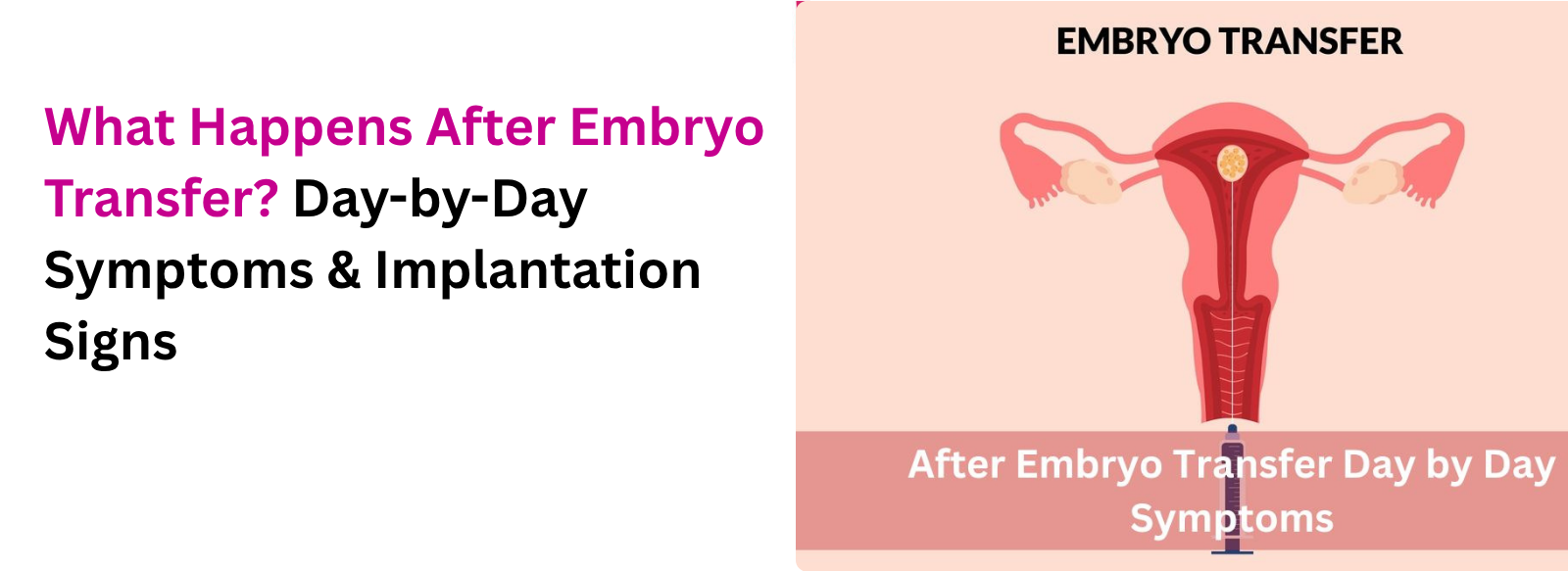
During embryo transfer, the fertility specialist places the embryo inside the uterus using a thin, flexible catheter. The procedure is usually performed under ultrasound guidance to help position the embryo appropriately within the uterine cavity.
The embryo does not attach to the uterine lining immediately after transfer. It must first develop further and interact with the endometrium, which is the inner lining of the uterus. For implantation to occur, the embryo generally passes through three important stages:
1. Apposition: Initial Contact
The embryo, particularly a blastocyst, expands and hatches from its protective outer layer called the zona pellucida. It then comes into close contact with the uterine lining.
At this stage, the embryo loosely aligns with the endometrium. Most women do not experience a specific symptom that indicates this process.
2. Adhesion: Firm Attachment
The outer cells of the embryo, known as trophoblast cells, begin attaching more firmly to the endometrial lining.
This attachment is an important step because the embryo must establish a stable connection with the uterus before implantation can progress.
3. Invasion: Implantation Begins
The trophoblast cells gradually move into the deeper layers of the endometrium and begin establishing an early connection with the mother’s blood supply.
As implantation progresses, the developing pregnancy starts producing human chorionic gonadotropin (hCG). This hormone later becomes detectable through a Beta-hCG blood test.
Day-by-Day Symptoms After a Day-5 Blastocyst Transfer
The timeline below explains what may happen after a Day-5 blastocyst transfer. Every IVF cycle is different, and symptoms can vary depending on embryo development, hormone support, and individual response.
Day 1–2 After Embryo Transfer: Hatching and Initial Contact
During the first one or two days, the blastocyst may continue expanding and begin hatching from its outer shell. It may then start making initial contact with the uterine lining. Some women may notice:
Mild pelvic heaviness
Slight lower abdominal discomfort
Mild bloating
No symptoms at all
Many women feel completely normal during this stage. This does not indicate that the embryo has failed to implant. Any mild discomfort may also result from the transfer procedure or progesterone medication rather than implantation.
Day 3–5 After Embryo Transfer: Attachment and Early Implantation
During this period, the embryo may begin attaching more firmly to the endometrium. The implantation process may start as the embryo interacts with the uterine lining. Possible symptoms include:
Mild lower abdominal cramps
Light pulling or pinching sensations
Occasional pelvic twinges
Bloating
Mild fatigue
Some patients describe these sensations as “period jaisa halka pain” or “thodi jehi khichav wali feeling.” However, mild cramps do not confirm implantation because progesterone can cause similar symptoms. Many women continue to have no symptoms during this period, which remains medically normal.
Day 6–8 After Embryo Transfer: Deeper Implantation and Early hCG Production
If implantation progresses, the embryo may become more deeply embedded within the endometrium. The developing pregnancy may begin producing small amounts of hCG. Some women may experience:
Light pink or brown spotting
Mild cramping
Breast tenderness
Increased tiredness
Bloating
Light spotting may occur during implantation, but it does not happen in every successful pregnancy. Similarly, the absence of spotting does not indicate a negative outcome.
Patients on online IVF forums often share that they experienced a few drops of brown spotting and later received a positive result. Others report no spotting or symptoms and still achieve pregnancy. These experiences show why symptoms should not be used as a reliable measure of implantation.
Day 9–11 After Embryo Transfer: Rising Hormone Levels
If implantation has occurred, hCG levels may start rising in the bloodstream. However, hormone levels can differ significantly between pregnancies. Possible symptoms include:
Increased fatigue
Breast soreness
Mild nausea
Frequent urination
Mood changes
A metallic taste in the mouth
Mild abdominal bloating
Some women may feel several symptoms, while others may feel completely normal. At this stage, many couples become tempted to use a home pregnancy test. However, testing too early can produce an inaccurate result because hCG may still be below the detection threshold.
Day 12–14 After Embryo Transfer: Pregnancy Confirmation Phase
By this stage, the fertility specialist may recommend a quantitative Beta-hCG blood test. The test measures the amount of hCG present in the blood and provides a more reliable assessment than symptoms alone. Symptoms may:
Continue
Increase
Reduce temporarily
Appear and disappear
A change in symptoms does not automatically indicate a problem. Early pregnancy symptoms can fluctuate because hormone levels and individual responses vary. Your fertility specialist may repeat the Beta-hCG test after approximately 48 hours to assess how the hormone level is changing.
What Happens After a Day-3 Embryo Transfer?
A Day-3 embryo is at an earlier developmental stage than a Day-5 blastocyst.
After transfer, the embryo generally requires additional time inside the uterus to develop into a blastocyst before implantation can begin. Therefore, the timeline may shift by approximately two to three days. A general Day-3 transfer timeline may look like this
Days After Transfer | Expected Biological Activity |
Day 1–2 | Continued embryo development |
Day 3–5 | Development towards the blastocyst stage |
Day 4–7 | Hatching and early implantation may begin |
Day 7–10 | Implantation may progress and early hCG production may start |
Day 9–12 onward | hCG may become detectable in blood |
Day 12–14 | Beta-hCG testing as advised by the fertility specialist |
The exact timing can vary. Embryo development, endometrial receptivity, and the individual treatment plan influence the implantation process.
Are Cramping and Spotting After Embryo Transfer Normal?
Mild cramping and light spotting can occur after embryo transfer. However, they do not always indicate implantation.
Mild Cramping
Mild cramps may occur because of:
Progesterone medication
Temporary uterine sensitivity
The transfer procedure
Early implantation
Normal hormonal changes
A mild pulling sensation or period-like discomfort may be observed. However, severe or increasing pain requires medical evaluation.
Light Spotting
Light pink or brown spotting may occur in some women. Possible causes include:
Cervical irritation after the transfer procedure
Hormonal changes
Implantation-related changes
Not every successful pregnancy causes implantation spotting. Therefore, “spotting nahi hui toh implantation nahi hua” is a common misconception.
Pregnancy Symptoms or IVF Medication Side Effects?
One of the most confusing aspects of the two-week wait is that IVF medications can closely mimic early pregnancy symptoms. Progesterone and estrogen support the uterine lining, but they may also cause symptoms similar to those seen in early pregnancy.
Symptom | Possible Early Pregnancy Cause | Possible IVF Medication or Procedure Cause |
Mild cramping | Early implantation and uterine changes | Progesterone or temporary uterine sensitivity |
Breast tenderness | Rising pregnancy hormones | Progesterone supplementation |
Bloating | Hormonal changes | Progesterone or recent ovarian stimulation |
Fatigue | Early pregnancy hormone changes | Progesterone medication |
Light spotting | Implantation-related changes | Cervical irritation after transfer |
Mood changes | Hormonal changes | Estrogen or progesterone support |
For this reason, doctors do not use symptoms alone to confirm pregnancy. A woman may experience multiple symptoms and receive a negative Beta-hCG result. Another woman may experience no symptoms and receive a positive result.
Is It Normal to Have No Symptoms After Embryo Transfer?
Yes. Having no symptoms after embryo transfer can be completely normal.
Some women experience breast tenderness, fatigue, cramps, or bloating. Others do not notice any physical changes before their pregnancy test. The absence of symptoms does not mean:
The embryo did not implant
The IVF cycle has failed
The pregnancy test will be negative
Many successful IVF pregnancies begin without noticeable symptoms during the two-week wait. Therefore, avoid repeatedly comparing your symptoms with those of other IVF patients. Every body responds differently to hormone medication and early pregnancy changes.
Can You Take a Home Pregnancy Test After Embryo Transfer?
A home urine pregnancy test may detect hCG, but testing too early can cause confusion. Testing before the recommended date may result in:
False-negative results: hCG levels may still be too low to detect.
False-positive results: Residual hCG from a trigger injection may remain in the body.
For this reason, fertility specialists generally recommend following the scheduled testing date and using a quantitative Beta-hCG blood test for confirmation. Do not stop progesterone, estrogen, or any prescribed medication based only on an early home test.
What Should You Do After Embryo Transfer?
After embryo transfer, most women can continue a light and comfortable routine unless their fertility specialist provides different instructions. You may:
Walk gently
Perform light household activities
Eat a balanced diet
Stay hydrated
Take prescribed medicines on time
Continue normal daily activities without overexertion
You should avoid:
Heavy lifting
High-intensity exercise
Strenuous physical activity
Smoking and alcohol
Taking unprescribed medicines
Prolonged strict bed rest does not improve implantation rates. The embryo does not “fall out” when you walk, sit, use the washroom, or sleep normally.
Many couples in Punjab ask, “Transfer toh ho gaya, hun bilkul bed rest karna zaroori hai?” In most cases, prolonged bed rest is not required. Your fertility specialist can recommend an activity level based on your treatment and medical condition.
At Vardaan IVF Center, our fertility specialists guide patients through the post-transfer period with personalised instructions rather than a one-size-fits-all approach.
When Should You Contact Your IVF Specialist?
Mild cramps, slight bloating, or light spotting may occur after embryo transfer. However, some symptoms require prompt medical attention. Contact your fertility specialist if you experience:
Severe or sharp pelvic pain
Heavy vaginal bleeding
Bleeding that soaks a pad
High fever
Persistent vomiting
Severe abdominal swelling
Sudden breathlessness
Reduced urine output
Rapid weight gain or significant abdominal discomfort
These symptoms may require assessment for complications such as infection or Ovarian Hyperstimulation Syndrome (OHSS), particularly after a recent ovarian stimulation cycle. Do not ignore severe symptoms or wait for the scheduled pregnancy test if you feel unwell.
Embryo Transfer Rules and IVF Standards in India
IVF treatment in India operates under the Assisted Reproductive Technology (Regulation) Act, 2021, along with applicable clinical and regulatory standards. Important considerations include:
Registered ART Clinics
ART clinics must follow the registration and regulatory framework established under Indian law. Couples should choose a properly registered fertility centre with qualified IVF specialists and appropriate laboratory standards.
Controlled Embryo Transfer Practices
Fertility specialists carefully decide the number of embryos to transfer based on factors such as:
Age
Embryo quality
Previous IVF history
Medical condition
Risk of multiple pregnancy
The aim is to support pregnancy while reducing avoidable risks associated with high-order multiple pregnancies.
Sex Selection Is Illegal
Sex selection is prohibited under Indian law. Genetic testing should only be performed for medically appropriate indications and according to applicable regulations.
Beta-hCG Remains the Standard Confirmation Test
A quantitative Beta-hCG blood test provides the most reliable initial confirmation after embryo transfer. Your specialist may repeat the test to evaluate the hormone trend.
Why the Two-Week Wait Feels Emotionally Difficult
The period after embryo transfer can bring hope, anxiety, excitement, and uncertainty at the same time. Many couples monitor every sensation and ask:
“Kya yeh implantation pain hai?”
“Period jaisa pain aa raha hai, kya IVF fail ho gaya?”
“Koi symptom nahi hai, kya pregnancy nahi hui?”
“Spotting hui hai, kya positive result aayega?”
These questions are understandable, but symptoms cannot accurately predict the result. The most helpful approach is to:
Take medications exactly as prescribed
Follow the clinic’s instructions
Avoid early testing unless advised
Maintain a light routine
Contact your IVF team if concerning symptoms occur
Wait for the scheduled Beta-hCG test
Choosing the Right IVF Support in Punjab
Embryo transfer is not only a procedure. It is a carefully planned stage that requires embryo assessment, endometrial preparation, hormonal support, laboratory expertise, and close clinical monitoring. Couples looking for the best IVF centre in Punjab should consider factors such as:
Experience of the IVF specialist
Quality of the embryology laboratory
Personalized treatment planning
Transparent communication
Appropriate use of advanced reproductive technology
Availability of support before and after embryo transfer
With modern IVF centres in Jalandhar and Amritsar, Vardaan IVF Center provides advanced fertility treatment supported by experienced fertility specialists, gynecologists, and IVF experts.
Founded under the leadership of Dr. Vareesh Kumar, Founder, Director, and Chief IVF Specialist, Vardaan has helped more than 30,000 couples through personalised fertility care across Punjab over the period of more than 24 years.
Final Thoughts
What Happens After Embryo Transfer? Understanding it can help reduce unnecessary anxiety during the waiting period. The embryo must develop, interact with the uterine lining, attach, and begin implantation before hCG levels rise. Mild cramps, spotting, fatigue, breast tenderness, or no symptoms at all may occur. None of these signs can independently confirm or rule out pregnancy
The scheduled Beta-hCG blood test remains the most reliable way to assess the outcome. Continue your prescribed medication, maintain a comfortable routine, and stay in contact with your fertility specialist throughout the post-transfer period. If you are planning IVF or need personalised guidance after embryo transfer, consult an experienced fertility team at Vardaan IVF Center in Jalandhar or Amritsar.
[Book Your Consultation Now]
Frequently Asked Questions
1. What happens after embryo transfer day by day?
After transfer, the embryo continues developing, may hatch from its outer layer, and begins interacting with the uterine lining. Implantation may then progress, followed by early hCG production. The exact timeline depends on whether a Day-3 embryo or Day-5 blastocyst was transferred.
2. Is mild cramping after embryo transfer a good sign?
Mild cramping may occur after embryo transfer, but it cannot confirm implantation. Progesterone medication, the transfer procedure, and normal hormonal changes may also cause cramps.
3. Is spotting after embryo transfer normal?
Light pink or brown spotting may occur in some women. It may be related to implantation, hormonal changes, or cervical irritation. However, many successful pregnancies occur without any spotting.
4. What if I have no symptoms after embryo transfer?
No symptoms can be completely normal. The absence of symptoms does not mean the embryo failed to implant or that the IVF cycle was unsuccessful.
5. When should I take a pregnancy test after embryo transfer?
Follow the date recommended by your fertility specialist. A quantitative Beta-hCG blood test is generally preferred because early home tests may produce false-negative or false-positive results.
6. Can I walk after embryo transfer?
In most cases, gentle walking and light daily activities are allowed. Prolonged strict bed rest does not improve implantation rates. Follow any specific advice given by your fertility specialist.
7. Can the embryo fall out after transfer?
No. Normal activities such as walking, sitting, sleeping, or using the washroom do not cause the embryo to fall out.