When you are trying to conceive (especially through IVF), it can feel confusing and overwhelming when everything appears normal, yet pregnancy does not happen. As IVF specialists, we often meet couples who ask us, “Doctor, is there something else going on inside my body that we’re missing?”
One important but often misunderstood factor is immunology. In this article, we will help you understand the role of immunology in IVF, how your immune system may influence fertility, and when immune evaluation may be relevant in your IVF journey.
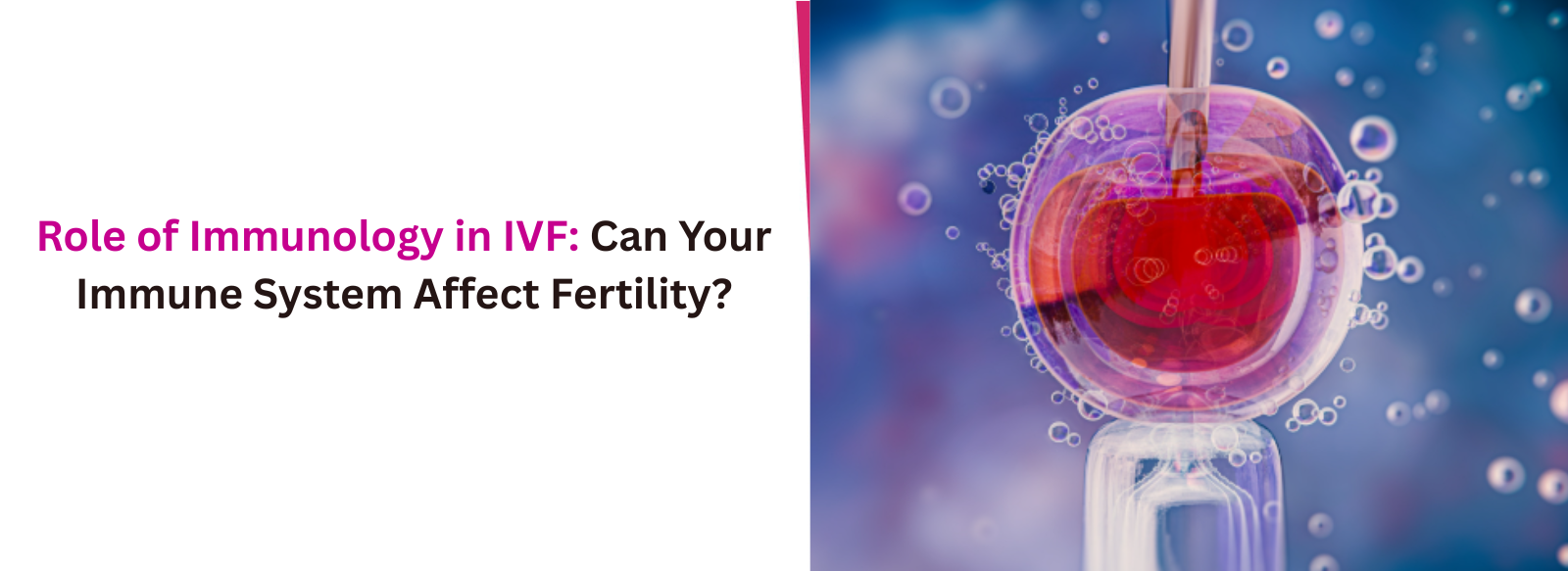
Role of Immunology in IVF
Your immune system’s primary role is to protect you from infections and harmful invaders. However, pregnancy itself is a unique biological situation. An embryo carries genetic material from both partners, which means your body must accept something that is partly ‘foreign.’
In a healthy pregnancy, the immune system adapts beautifully. It protects you while allowing the embryo to implant and grow. But when this balance is disturbed, the immune system may unintentionally interfere with implantation or early pregnancy.
This delicate balance is at the heart of the role of immunology in IVF.
How a Healthy Immune System Supports Fertility and Pregnancy
We want to reassure you that the immune system is not the enemy. In fact, it plays a crucial supportive role in natural conception and IVF success. A well-regulated immune response:
Helps prepare the uterine lining for implantation
Supports early placental development
Protects the pregnancy from infections
Promotes tolerance toward the developing embryo
When immune regulation is optimal, implantation occurs smoothly, and pregnancy can progress naturally. Problems arise only when the immune response becomes overactive, misdirected, or chronically inflamed.
When the Immune System May Work Against IVF Success
In some individuals, the immune system becomes too aggressive or improperly regulated. Instead of supporting implantation, it may treat the embryo as a threat. From an IVF doctor’s perspective, immune-related fertility issues may contribute to:
Repeated implantation failure despite good-quality embryos
Unexplained infertility
Recurrent early pregnancy loss
Poor placental development
It is important to understand that immune issues are not present in all IVF patients, and they are never assumed lightly. We consider them only when your clinical history suggests a possible immune involvement.
Immune-Related Conditions That Can Affect IVF Outcomes
As fertility experts, we look at immune factors only after evaluating your overall reproductive health. Some immune-related conditions that may influence IVF outcomes include:
Autoimmune Responses
Autoimmune conditions occur when the immune system mistakenly attacks the body’s own tissues. In fertility care, certain autoimmune antibodies may interfere with implantation or placental development.
Elevated Natural Killer (NK) Cell Activity
Natural killer cells are part of the immune system and play a role in early pregnancy. However, excessive NK cell activity may disrupt implantation in some patients.
Antiphospholipid Antibodies
These antibodies are associated with abnormal blood clotting and may affect implantation or increase the risk of early miscarriage.
Chronic Uterine Inflammation
Low-grade inflammation in the uterus can alter endometrial receptivity, making it harder for an embryo to implant even when IVF cycles are otherwise well-planned.
Each of these conditions is evaluated carefully and only when clinically indicated.
Signs That Immunology May Be Affecting Your IVF Journey
Many patients ask us, “How will I know if immune factors are affecting me?” While symptoms are not always obvious, we may consider immunological evaluation if you have experienced:
Multiple IVF failures with good-quality embryos
Recurrent miscarriages, especially in early pregnancy
Unexplained infertility despite normal test results
A history of autoimmune disorders
We want to emphasize that immune testing is not routine for everyone. It is recommended only when your IVF specialist believes it may provide meaningful insight.
Immunological Testing in IVF: What Is Assessed and Why
When immune factors are suspected, testing is done in a structured and evidence-based manner. As IVF doctors, our goal is not to over-test but to test with purpose. Common evaluations may include:
Autoimmune antibody screening
NK cell activity assessment (where clinically appropriate)
Inflammatory markers
Blood clotting-related immune factors
These tests help us understand whether immune modulation could potentially improve implantation or pregnancy outcomes.
Treatment Approaches for Immune-Related IVF Challenges
If immune imbalance is identified, treatment is always personalized and cautious. There is no one-size-fits-all immunotherapy in IVF. Depending on your specific findings, an IVF specialist may recommend:
Short-term immune-modulating medications
Anti-inflammatory support
Blood-thinning therapy where indicated
Careful timing of embryo transfer
Lifestyle and nutritional adjustments to reduce inflammation
We always weigh the benefits versus risks, and treatments are given only when there is a clear clinical rationale.
Does Treating Immune Issues Improve IVF Success Rates?
This is one of the most common questions we hear. The honest answer is it depends on the individual case.
In carefully selected patients, addressing immune factors may improve outcomes. Particularly those with repeated implantation failure or recurrent pregnancy loss. However, immune treatment is not a guarantee, and it does not replace core IVF principles such as embryo quality and uterine health.
As fertility experts, we rely on a combination of scientific evidence, clinical experience, and your unique history before recommending immune-based interventions.
Who Should Consider Immunology as Part of Their IVF Plan?
Not every patient undergoing IVF needs immune evaluation. In fact, most successful IVF pregnancies occur without any immune intervention. You may benefit from immunological assessment if you:
Have experienced repeated IVF failures without explanation
Have recurrent miscarriages despite normal embryos
Have known autoimmune conditions
The IVF doctor feels immune factors may be relevant based on your history
The key point is this: immune evaluation should be guided by an experienced IVF specialist, not trends or online advice.
The Importance of a Balanced, Individualized Approach
One of our responsibilities as IVF doctors is to protect patients from unnecessary treatments while also ensuring that no important factor is overlooked.
The role of immunology in IVF is real. But it is also nuanced. Over-diagnosis and over-treatment can create anxiety, side effects, and unrealistic expectations. That is why immune-based fertility care must always be thoughtful, evidence-driven, and personalized.
Working With the Right IVF Specialist and Fertility Expert
If you are concerned about immune factors in your fertility journey, the most important step is to consult an experienced IVF specialist in Jalandhar or fertility expert who understands both reproductive medicine and immunology.
Your body is not “failing you.” Often, it simply needs the right understanding and support. We believe that successful IVF care is built on:
Listening carefully to your journey
Reviewing past cycles in detail
Using immune testing only when clinically justified
Offering clear explanations and realistic guidance
Final Thoughts
The role of immunology in IVF is about balance, not fear. When approached correctly, immune evaluation can offer answers and direction for selected patients who have struggled despite well-planned IVF cycles.
If you feel stuck, confused, or unsure about your next step, remember that you do not have to navigate this alone. With the right IVF doctor in Jalandhar guiding you, every decision can be made with clarity, compassion, and confidence.
Vardaan Hospital is the best IVF hospital in Jalandhar and IVF clinics in Amritsar, offering compassionate, advanced fertility care with trusted specialists. For personalized guidance and hopeful parenthood support, book your appointment now.