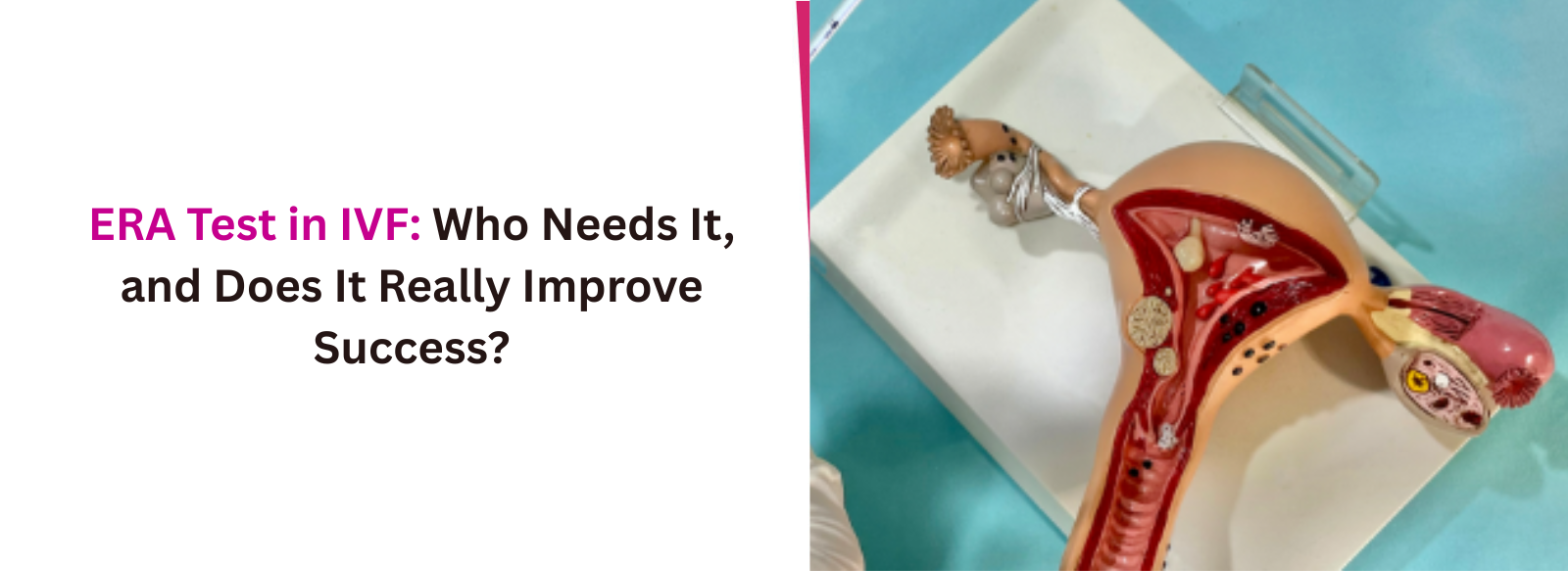

In vitro fertilization (IVF) has helped millions of couples achieve parenthood, yet implantation failure remains one of the most frustrating challenges in fertility treatment. Many patients ask an important question after repeated IVF failures: “If my embryos are good, why am I still not getting pregnant?”
This is where the ERA Test in IVF has gained attention. Designed to personalize embryo transfer timing, the ERA test promises to improve implantation by identifying the most receptive phase of the uterus. But who actually needs this test, and does it truly improve IVF success rates? Let’s explore this in detail.
What Is ERA Test in IVF?
The ERA Test in IVF stands for Endometrial Receptivity Analysis. It is a specialized genetic test that evaluates whether the endometrium (uterine lining) is ready to accept an embryo at a specific time.
Traditionally, embryo transfer is performed based on standardized hormone timelines. However, research has shown that not every woman’s “window of implantation” is the same. Some women have a displaced or shifted implantation window, meaning the embryo is transferred either too early or too late, even when hormone levels look normal.
The ERA test analyzes the expression of hundreds of genes in the endometrial tissue to determine whether the uterus is:
Receptive
Pre-receptive
Post-receptive
Based on this result, doctors can personalize the exact timing of embryo transfer.
Why Implantation Fails Even with Good-Quality Embryos
One of the biggest misconceptions in IVF is that embryo quality alone determines success. In reality, implantation depends on two equally important factors:
A healthy embryo
A receptive endometrium
Even genetically normal or high-grade embryos can fail to implant if the uterus is not receptive at the time of transfer. Common reasons include:
Hormonal timing mismatch
Altered progesterone response
Subtle endometrial gene expression differences
Inflammatory or functional endometrial issues
The ERA Test in IVF focuses specifically on solving this timing problem rather than repeatedly transferring embryos blindly.
Who Needs ERA Test in IVF?
The ERA test is not recommended for everyone, and this is where many patients get confused. Its benefits are mainly seen in selected cases.
Women with Recurrent Implantation Failure (RIF)
Recurrent implantation failure is usually defined as:
Failure to achieve pregnancy after two or more embryo transfers, or
Transfer of multiple good-quality embryos without success
For these patients, the ERA Test in IVF can be extremely helpful. Studies show that a significant percentage of women with recurrent implantation failure have a displaced implantation window, which standard IVF protocols fail to detect.
Patients with Multiple Failed Embryo Transfers
If you’ve undergone multiple IVF or frozen embryo transfer (FET) cycles with no implantation despite good embryos, ERA becomes a logical next step. Instead of changing medications randomly, the test provides objective data to guide transfer timing.
Women with Unexplained IVF Failure
Some patients have:
Normal uterus on scans
Good hormone levels
High-quality embryos
Yet pregnancy doesn’t occur. In such unexplained cases, ERA Test in IVF helps identify whether endometrial receptivity is the missing link.
Is the ERA Test Needed in the First IVF Cycle?
In most cases, the answer is NO. For women undergoing their first IVF attempt, especially younger patients with no prior failures, ERA testing is generally not advised. IVF success rates are already high in the first or second cycles, and routine ERA testing may increase cost without clear benefit.
How Is the ERA Test in IVF Performed?
Understanding the procedure helps reduce anxiety, as many patients worry about pain or risks.
Step 1: Mock Cycle
The ERA test is done in a mock or dummy cycle, not during an actual embryo transfer cycle. Hormones are given to prepare the uterine lining exactly like a real embryo transfer.
Step 2: Endometrial Biopsy
On a specific day (usually after progesterone exposure), a small sample of endometrial tissue is collected using a thin catheter. The procedure:
Takes only a few minutes
Causes mild discomfort similar to menstrual cramps
Does not require anesthesia
Step 3: Laboratory Analysis
The tissue sample is sent to a specialized lab where gene expression analysis is performed. The report categorizes the endometrium as receptive or non-receptive and recommends the ideal timing for embryo transfer.
Step 4: Personalized Embryo Transfer
In the next IVF or frozen embryo transfer cycle, embryos are transferred exactly according to the ERA result, maximizing the chances of implantation.
Does ERA Testing in IVF Really Improve Success Rates?
This is the most important and most debated question.
What Research Shows
Clinical studies suggest that the ERA Test in IVF improves implantation rates in selected patients, particularly those with recurrent implantation failure. In women with a displaced implantation window, personalized embryo transfer guided by ERA has shown:
Higher implantation rates
Improved clinical pregnancy rates
Reduced cycle failures
When ERA Works Best
ERA is most effective when:
Embryo quality is already optimized
Genetic testing (if indicated) has been considered
Uterine anatomy issues are ruled out
Realistic Expectations
It’s important to understand that ERA:
Does not guarantee pregnancy
Does not improve embryo quality
Is not useful for all patients
ERA Test in IVF improves timing, not overall fertility potential. Success still depends on age, egg quality, sperm health, and overall reproductive health.
Pros and Cons of ERA Test in IVF
Benefits
Personalized embryo transfer timing
Reduced guesswork in repeated failures
Evidence-based approach for RIF patients
Can prevent unnecessary multiple failed transfers
Limitations
Additional cost
Requires cycle delay
Not beneficial for first-time IVF patients
Results depend on proper cycle preparation
ERA Test in IVF Cost in India
The cost of ERA Test in IVF in India generally ranges between ₹35,000 to ₹60,000, depending on:
Laboratory used
Clinic expertise
City and infrastructure
While this may seem expensive, many couples find it cost-effective compared to repeated failed IVF cycles, both emotionally and financially. The decision should always be individualized rather than routine.
ERA Test vs Other Implantation Assessments
Traditional methods focus on:
Endometrial thickness
Hormone levels
Ultrasound appearance
While these are important, they do not assess molecular receptivity. ERA Test in IVF goes a step deeper by analyzing gene expression, making it more precise in selected cases.
However, ERA should not replace basic fertility evaluations. It works best as a complementary tool, not a standalone solution.
When Fertility Specialists Recommend ERA Test in IVF?
Experienced fertility doctors usually suggest ERA only after:
Repeated implantation failures
Confirmation that embryos are of good quality
Structural uterine issues are ruled out
Ethical IVF practice focuses on right test for the right patient, not blanket testing. This is why choosing an experienced clinic matters as much as the test itself.
Choosing the Right Clinic for ERA Test in IVF
The success of the ERA Test in IVF depends heavily on:
Correct cycle preparation
Accurate biopsy timing
Proper interpretation of results
Expertise in personalized embryo transfer
This level of precision requires a fertility center with strong clinical protocols and experience in managing complex IVF cases.
Many patients seek treatment at the Best IVF Center in Jalandhar and Amritsar because of:
Advanced diagnostic facilities
Personalized IVF planning
Experience with recurrent implantation failure
Ethical, evidence-based treatment decisions
A center that understands when not to recommend ERA is just as important as one that knows when it’s needed.
Final Thoughts on If the ERA Test in IVF Right for You
The ERA Test in IVF is a powerful diagnostic tool but only for the right patients. It is most beneficial for women facing repeated IVF failures despite good embryos and normal reports. For first-time IVF patients, routine ERA testing is usually unnecessary.
If you’ve experienced emotional and financial stress from multiple failed transfers, ERA may help personalize your treatment and improve implantation chances. The key lies in expert evaluation, correct patient selection, and precise execution.
Before deciding, consult fertility specialists at the Best IVF Center in Jalandhar and IVF clinic in Amritsar to understand whether ERA fits into your unique fertility journey. Personalized care is what truly improves IVF success. Book your consultation with Vardaan IVF Team now.