The "two-week wait" is often the most anxiety-inducing phase of the fertility journey. Whether you are conceiving naturally or undergoing an In-Vitro Fertilization (IVF) cycle, the biological mystery of how an embryo attaches to the uterus is a source of constant questioning.
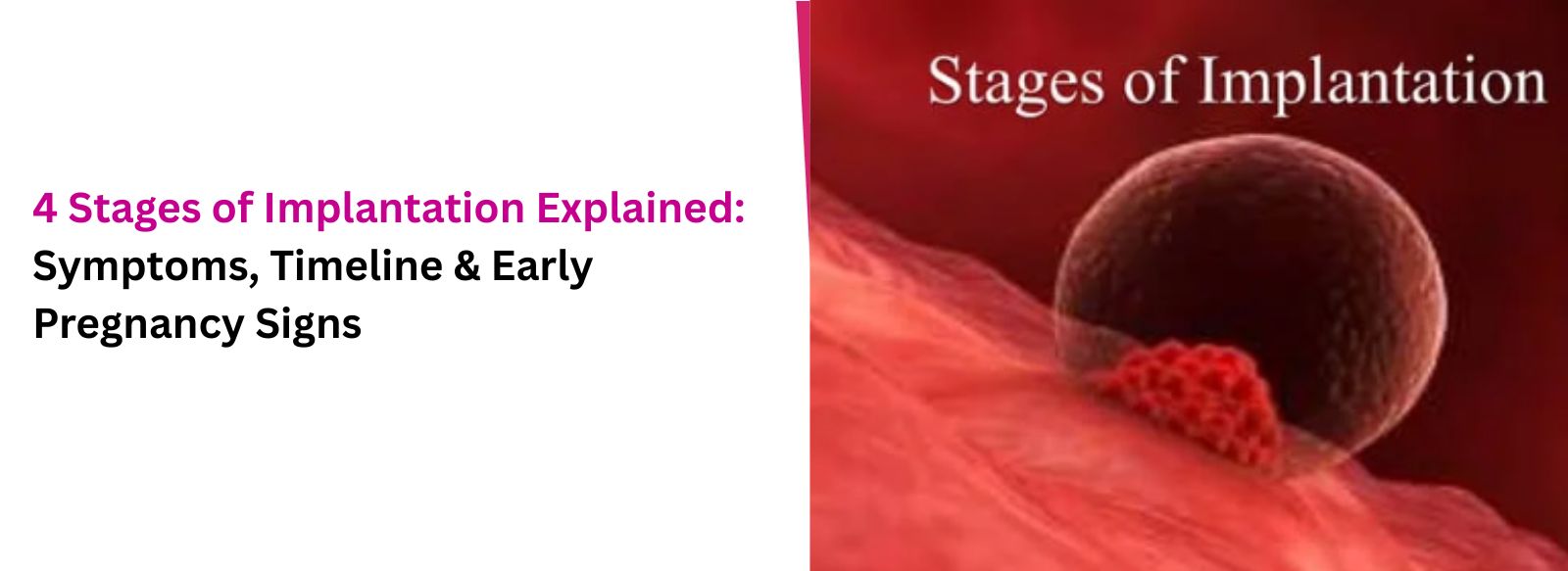
Implantation is not a singular moment. Implantation is a sophisticated, multi-day "molecular dialogue" between the embryo and the uterine lining (endometrium). Understanding the 4 stages of implantation (Apposition, Adhesion, Invasion, and Embedding) can provide clarity, reduce stress, and help you interpret early pregnancy symptoms with scientific accuracy.
What is Implantation?
Implantation is the process where a fertilized egg, now at the blastocyst stage, travels from the fallopian tube to the uterus and integrates into the endometrium. This transition marks the clinical beginning of pregnancy and the start of hCG (human Chorionic Gonadotropin) production.
The 4 Stages of Implantation: A Step-by-Step Breakdown
Here are 4 implantation stages a female who is going on a pregnancy journey should know.
1. Apposition (The Docking Phase)
This is the first, delicate contact between the blastocyst and the uterine wall:
The Process: The embryo "positions" itself, usually in the upper posterior wall of the uterus. It doesn't stick yet; it essentially "rolls" along the surface looking for the most receptive spot.
Molecular Key: This stage is governed by L-selectin (on the embryo) and Pinopodes (tiny protrusions on the uterus). Pinopodes appear only during the Window of Implantation (WOI), which typically lasts 24–48 hours.
Clinical Timing: Occurs approximately 6–7 days after ovulation.
2. Adhesion (The Molecular Glue)
Once a receptive spot is found, the connection becomes much stronger.
The Process: The embryo stops rolling and "sticks" to the endometrium. This is an irreversible attachment.
Molecular Key: The uterus expresses integrin and LIF (Leukemia Inhibitory Factor). Simultaneously, the uterus must shed a protein called MUC-1, which acts as a protective shield, to allow the embryo to touch the uterine surface.
Why it Matters: This stage is extremely important for IVF success. If the "molecular glue" is missing, the embryo cannot attach regardless of its quality.
3. Invasion (The Burrowing Phase)
This is the most active and transformative stage of the process.
The Process: The embryo's outer layer, the trophoblast, secretes enzymes that "digest" a path into the uterine lining. The embryo begins to sink deep into the tissue.
Vascular Connection: The embryo begins eroding the maternal spiral arterioles. This establishes the primitive circulatory link that will eventually become the placenta.
Common Symptom: This is the stage where many women experience implantation cramping or light implantation bleeding as the tissue is breached.
4. Embedding (The Full Integration)
The process concludes when the embryo is completely encapsulated within the uterine wall.
The Process: The endometrial tissue grows over the entry point, sealing the embryo inside.
The Hormonal Surge: Once embedded, the Syncytiotrophoblast cells begin producing hCG in significant quantities. This signals the body to stop the menstrual cycle and sustain the pregnancy via Progesterone.
Clinical Timing: Complete by 9–11 days post-ovulation.
Implantation Symptoms: What to Look For
While many women (roughly 60%) experience no symptoms at all, others may notice subtle biological cues:
Implantation Bleeding: Light spotting (pink or brown) that occurs about a week before your period is due. It typically lasts only 24–48 hours.
Implantation Cramping: A mild "tugging" or "pulling" sensation in the lower abdomen, different from the heavy ache of a period.
Breast Tenderness: As progesterone spikes during the Adhesion and Invasion stages, breasts may feel heavy or sensitive.
Fatigue: The metabolic energy required for the Invasion stage, combined with rising progesterone, can cause sudden exhaustion.
Critical Factors for Implantation Success
To achieve successful embedding, several clinical benchmarks must be met:
Clinical Entity | Optimal Range | Impact on Success |
Endometrial Thickness | 8–14 mm | Provides the "depth" required for the Invasion stage. |
Progesterone Levels | > 10 ng/mL | Stabilizes the lining and prevents the uterus from shedding. |
Lining Pattern | Trilaminar | A "triple-line" appearance on ultrasound indicates high receptivity. |
Window of Implantation | Days 20–24 | The 24–48 hour period when pinipedes are active. |
Embryo Quality | Euploid (Normal) | Chromosomally normal embryos have higher adhesion and invasion rates. |
The IVF Implantation Timeline
In an IVF (In-Vitro Fertilization) cycle, the timeline is slightly accelerated because the embryo is usually transferred at the Day 5 blastocyst stage.
24–48 Hours Post-Transfer: Apposition and Adhesion begin.
Days 3–5 Post-Transfer: Invasion and Embedding occur.
Days 7–10 Post-Transfer: hCG levels are typically high enough for a "Beta" blood test.
How to Support Healthy Implantation?
While you cannot "force" an embryo to stick, you can optimize the environment:
Anti-Inflammatory Diet: Focus on Omega-3 fatty acids and leafy greens to support uterine blood flow.
Stress Management: High cortisol can interfere with the "molecular dialogue" of the Adhesion stage.
Professional Guidance: If you have experienced Recurrent Implantation Failure (RIF), consider an ERA (Endometrial Receptivity Analysis) to ensure your transfer aligns perfectly with your personal Window of Implantation.
Conclusion
Understanding the 4 stages of implantation shifts the perspective from a "wait and see" game to an appreciation of a complex biological feat. If you are navigating this journey, remember that the absence of symptoms does not mean failure. It simply means your body is performing this hidden process quietly.
Successful implantation requires a perfect intersection of timing, embryo health, and molecular receptivity. Transitioning from the "Apposition" stage to "Embedding" takes approximately 72 to 96 hours, marking the transition from a fertilized egg to a clinical pregnancy.
Looking for the best IVF treatment in Punjab? Vardaan IVF Center specializes in navigating the complex 4 stages of implantation with world-class expertise. With state-of-the-art clinics in Jalandhar and Amritsar, our specialists offer personalized care and advanced diagnostics to turn your dreams of parenthood into reality. Make your appointment today.
FAQs
1. How does "Asynchronous Implantation" affect the 4 stages in an IVF cycle?
Asynchronous implantation occurs when the embryo’s developmental stage doesn't perfectly align with the uterine "Window of Implantation." In a natural cycle, the body coordinates this through hormonal signaling, but in IVF, the timing must be precisely managed by the medical team. If the uterus reaches the Adhesion stage too early or too late, the embryo may fail to attach. Advanced diagnostics like the Endometrial Receptivity Analysis (ERA) help specialists synchronize these four stages by identifying the exact hour the endometrium becomes receptive.
2. Can the immune system interfere with the Invasion and Embedding stages?
Yes, the immune system plays a paradoxical role during implantation. While a certain level of "controlled inflammation" is required for the Invasion stage to remodel maternal blood vessels, an overactive immune response can be detrimental. If the mother’s "Natural Killer" (uNK) cells perceive the embryo as a foreign threat rather than a guest, they may prevent the embryo from embedding deeply. Specialists often use immunotherapy or mild steroids to balance this environment, ensuring the immune system supports rather than hinders the final stages of attachment.
3. What is the "Decidualization" process, and is it a prerequisite for Stage 1?
Decidualization is the essential transformation of the uterine lining in preparation for an embryo. Triggered by progesterone, the endometrial cells become "decidualized," meaning they swell with nutrients (glycogen and lipids) to support the embryo during the Apposition and Adhesion phases. Without this metabolic shift, the uterine lining remains "hostile" or non-receptive. This is why progesterone supplementation is a cornerstone of IVF treatment. It ensures the "soil" is chemically prepared before the "seed" arrives for the first stage of implantation.
4. How do caffeine and nicotine specifically disrupt the Invasion stage?
Nicotine and excessive caffeine act as vasoconstrictors, meaning they temporarily narrow the blood vessels. During the Invasion stage, the embryo is actively attempting to tap into the maternal spiral arterioles to establish a blood supply. If these vessels are constricted, the embryo may struggle to receive the oxygen and nutrients needed to survive the burrowing process. This can lead to chemical pregnancies or early miscarriages. Maintaining optimal blood flow through hydration and avoiding stimulants is vital for the embryo to transition successfully to the Embedding stage.
5. Why is the "Triple Line" pattern on an ultrasound a predictor of success?
A "Triple Line" (Trilaminar) pattern is a visual indicator that the endometrium is structurally organized and biologically ready for the Apposition stage. The three distinct layers signify that estrogen has effectively thickened the lining and that the "Window of Implantation" is likely to open successfully. Clinicians at centers like Vardaan IVF look for this specific pattern because it suggests the lining has the necessary "depth" and "grip" to facilitate the transition from simple attachment to deep, healthy embedding of the blastocyst.